Dubai trades on both sides of the Creek, and the till has to follow
Dubai Creek splits the old city. Deira on one bank has the Gold Souk, the Spice Souk and dhows unloading at the docks. Bur Dubai and Karama on the other have tailors, electronics, textile shops and BurJuman. Farther out, Al Quoz and Jebel Ali hold the warehouses that stock all of it. A mall till, a souk stall and a warehouse counter need different things from a billing tool, and a shop in Deira rarely looks like one in Business Bay.
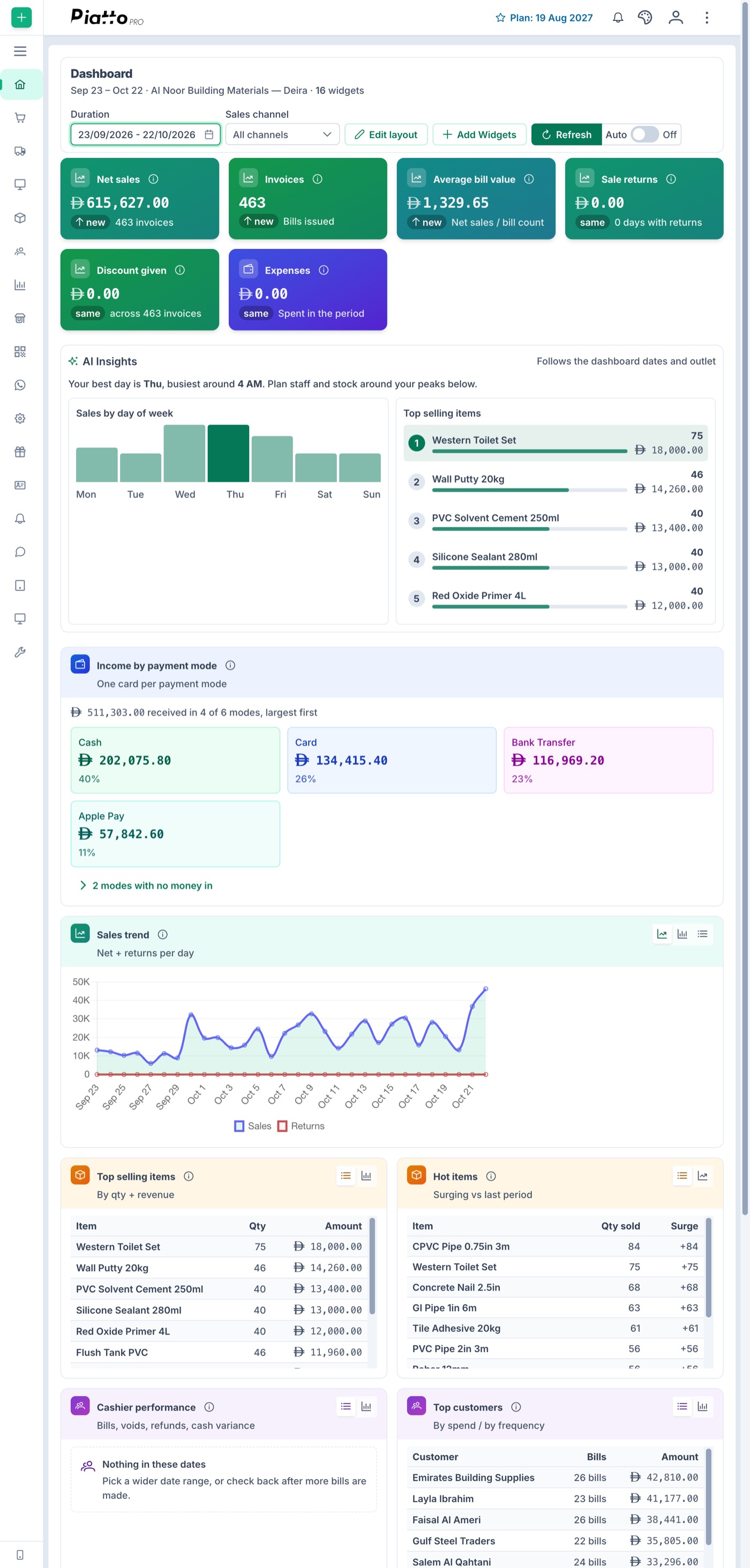
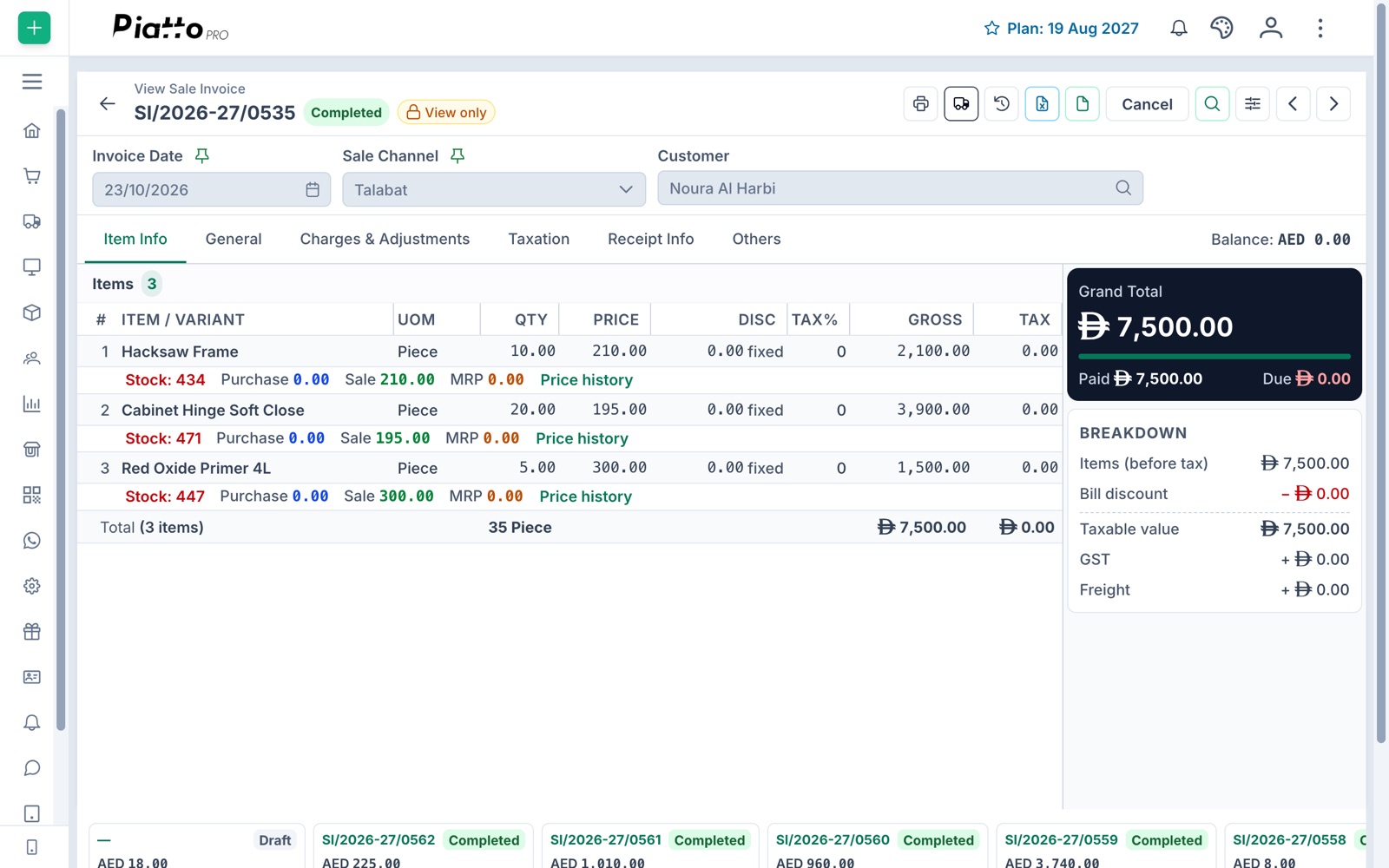
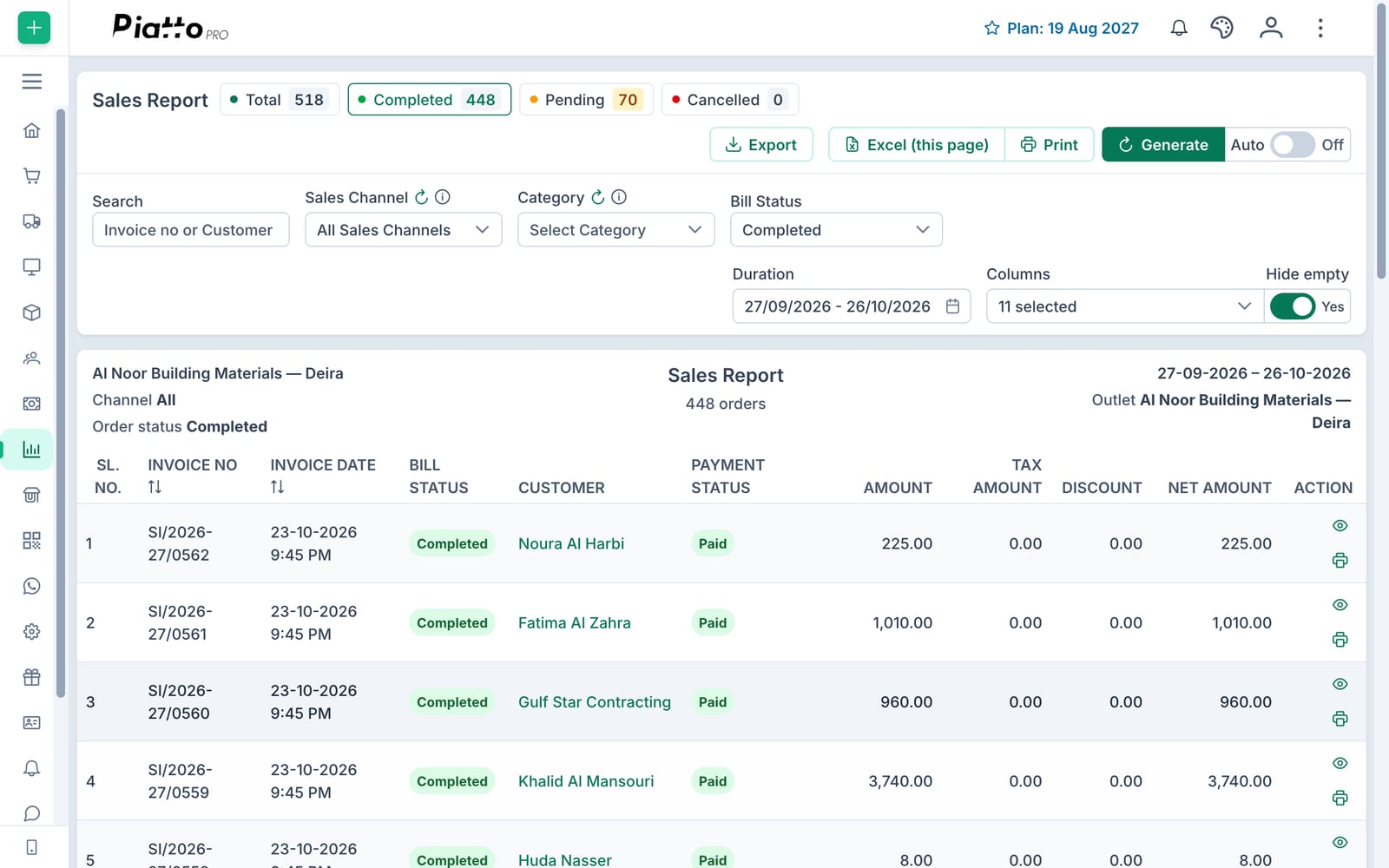
Dubai licenses mainland shops through Dubai Economy and Tourism, and VAT is the federal 5%, so every sale of a registered business needs a tax invoice with its TRN. Piatto Pro writes that VAT invoice with the buyer's tax number when the buyer is a business, keeps stock and party ledgers behind it, and bills offline when the connection fails. Stock and reports for several outlets live in one account.
The April 2024 deluge, and why a till should not depend on the network
On 16 April 2024, Dubai recorded more than 142 mm of rain in 24 hours, its heaviest on record. Dubai Airport paused operations for 25 minutes, the Dubai Mall and Mall of the Emirates took in water, power cuts were reported across Dubai, and some staff were stuck in their offices for more than 30 hours. A shop that could not open its payment screen or reach the cloud lost a day.
Piatto Pro's POS bills offline and syncs when the connection returns, so a counter that is open can still sell. It needs power at the device, so keep a charged tablet or a UPS nearby. Reports and accounts need a connection. In the long summer, the same logic holds for a mall with a weak signal or a stall in a covered souk lane.