A planned capital with a temple town at its heart
Bhubaneswar has two faces. The Old Town around Lingaraja Nagar, Rajarani Colony and Kapilaprasad is the "Temple City" of narrow, crowded lanes. The planned city, designed in 1948 and laid out in numbered units, grew north and south of it. Unit 1 holds the Market Building made for the first residents of the new capital. Later shopping stretched along Janpath and Cuttack-Puri Road into Saheed Nagar, Satya Nagar, Bapuji Nagar and Ashok Nagar. About 22,000 vendors work in the informal sector, some in regulated vending zones and some not.
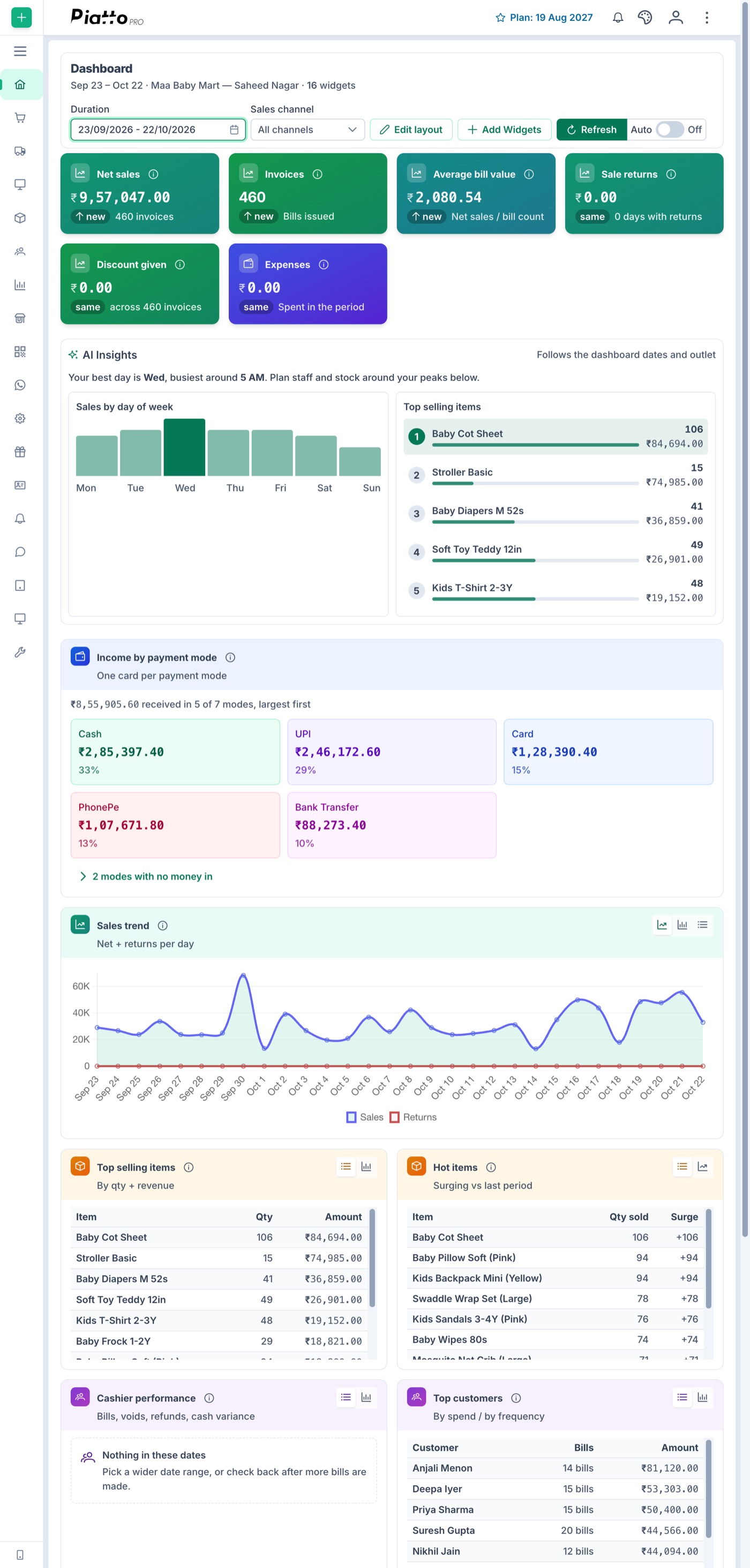
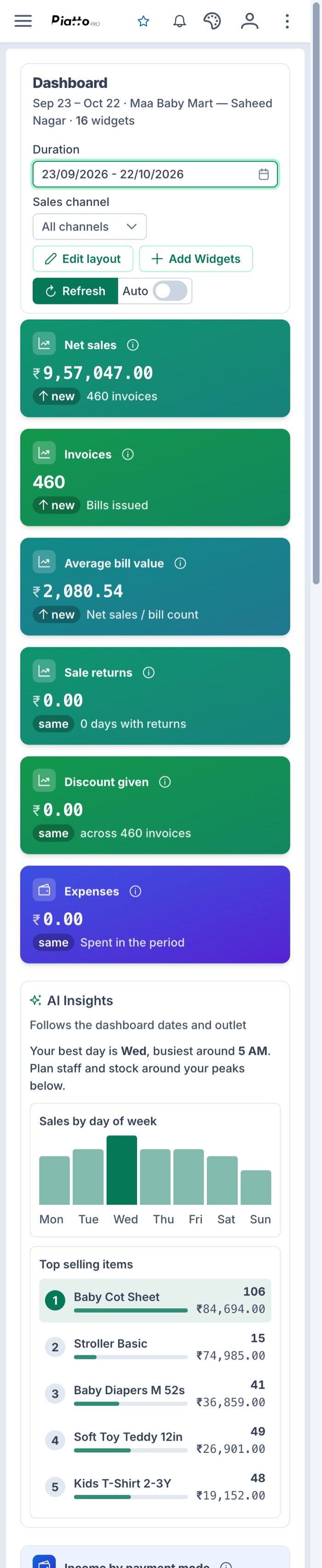
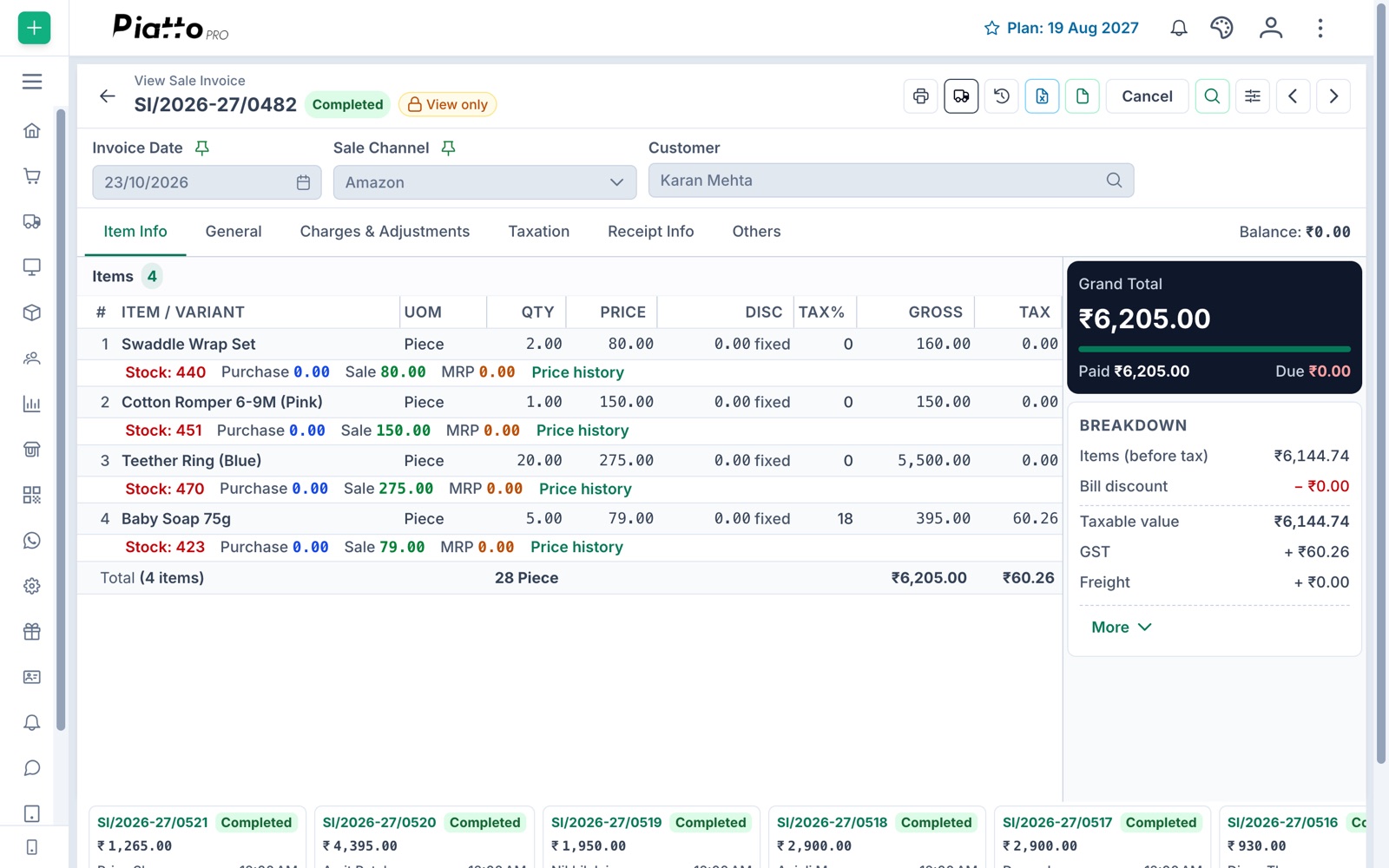
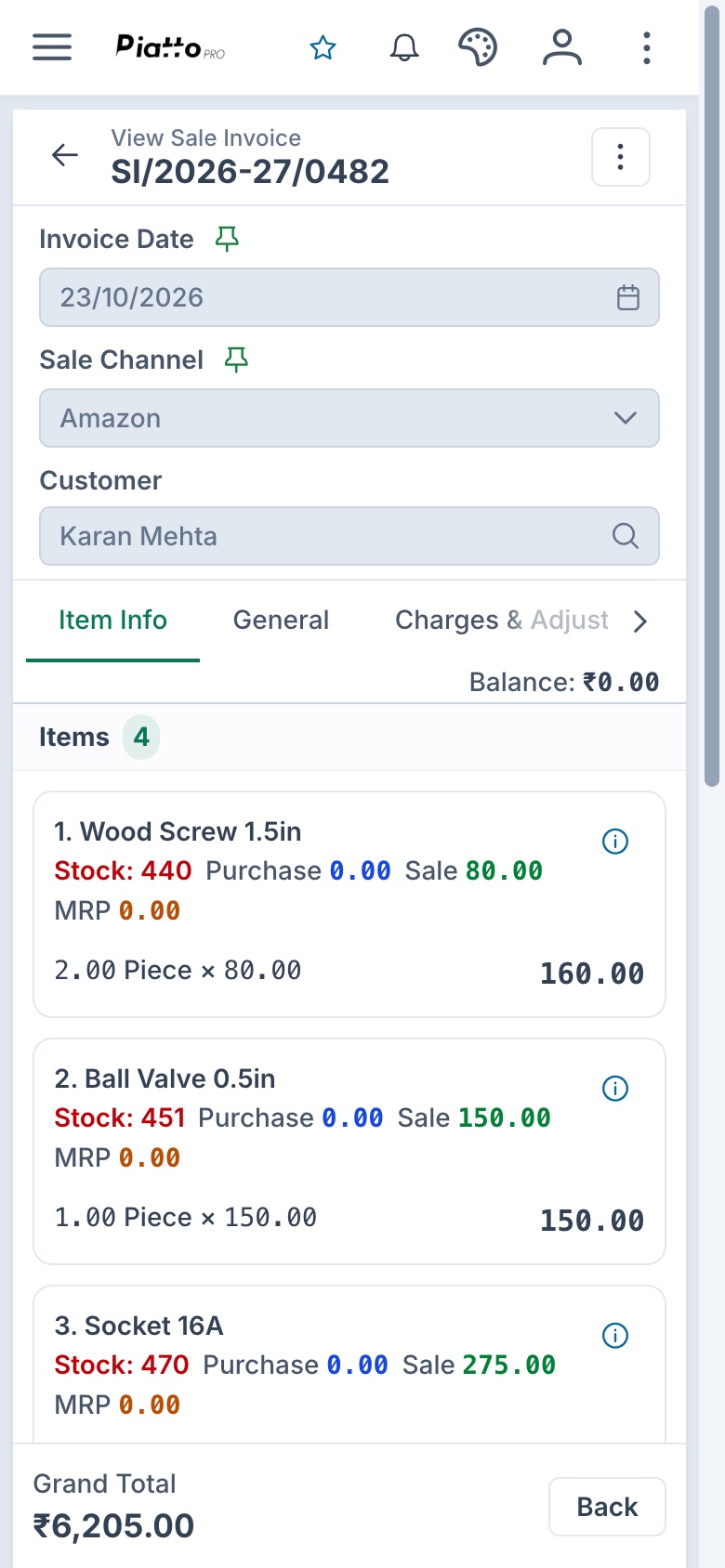
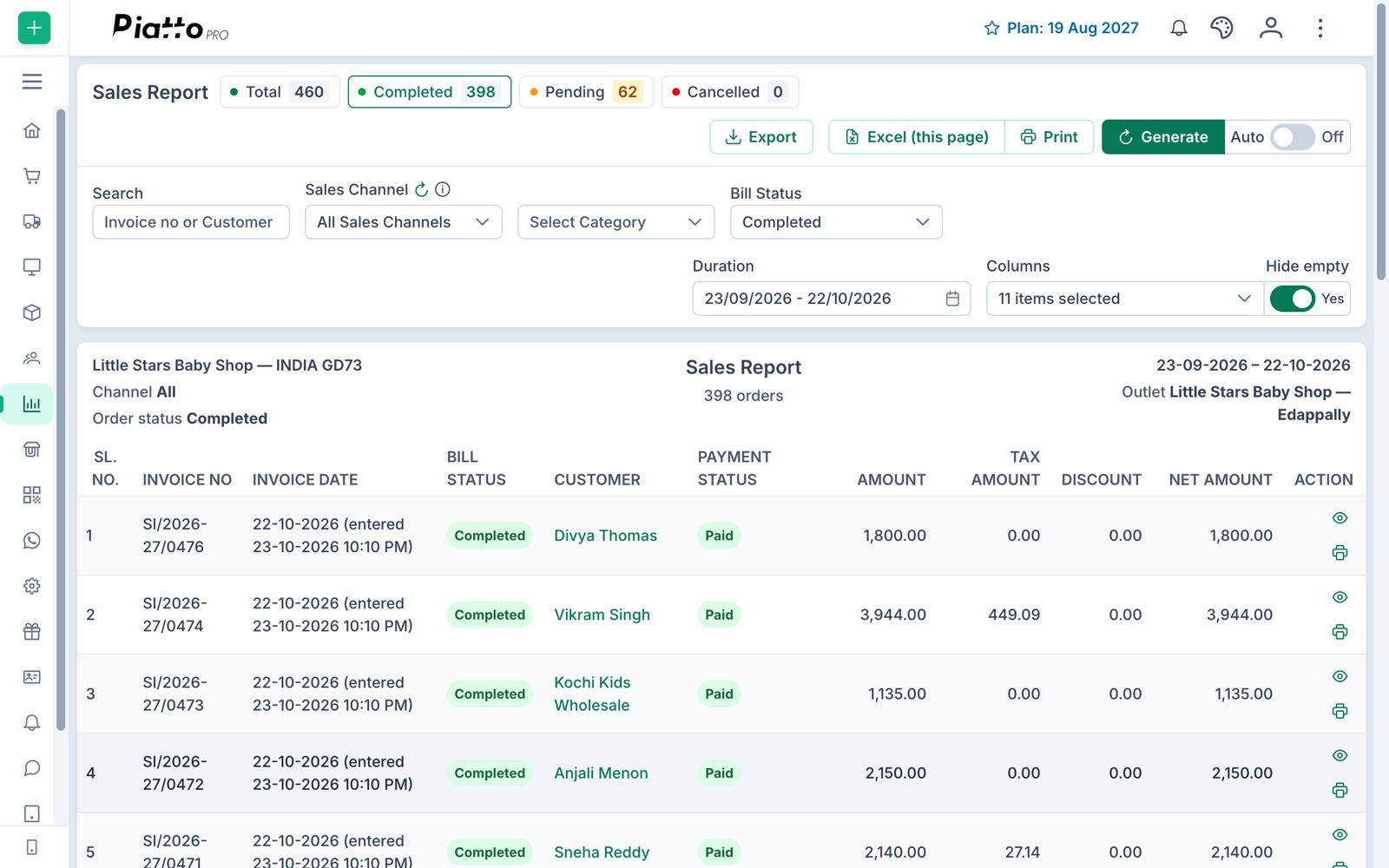
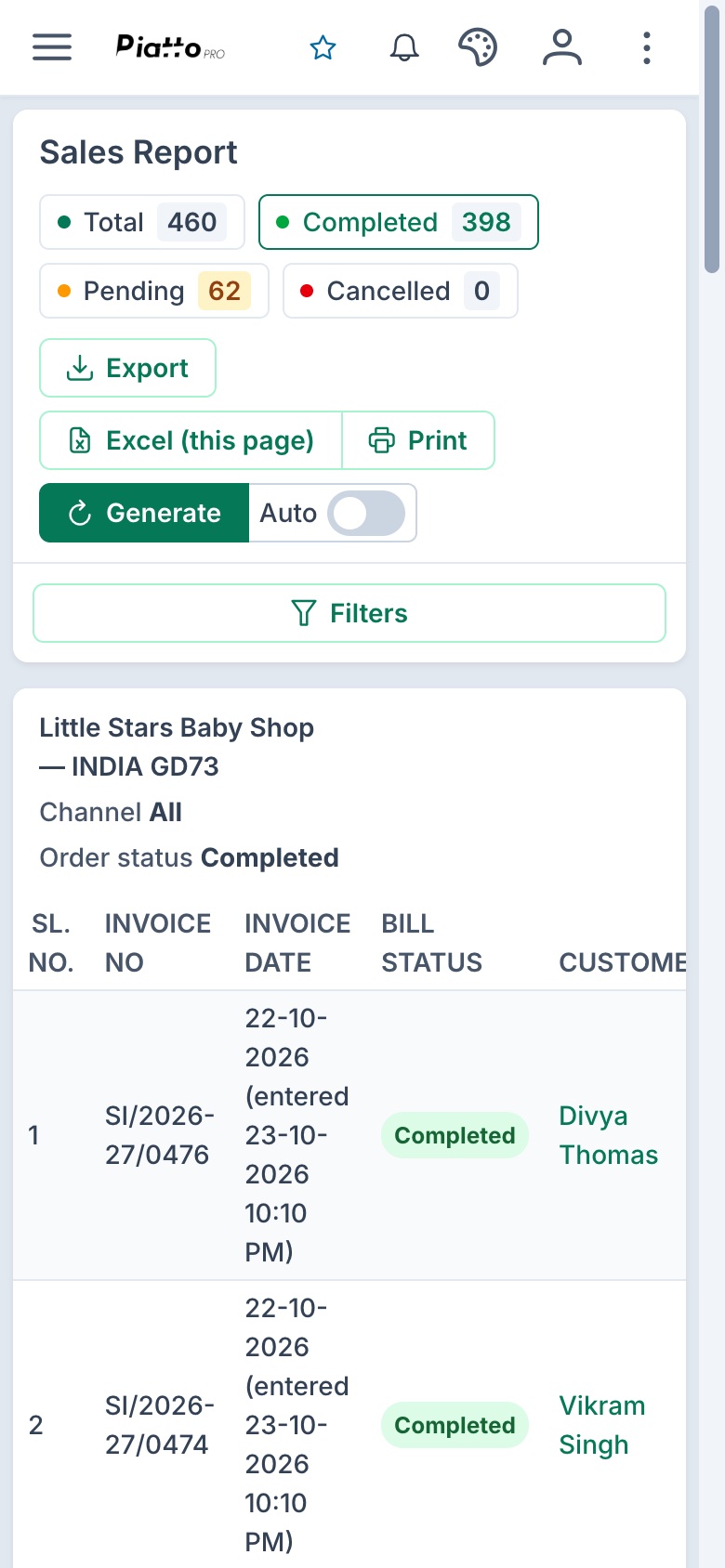
Piatto Pro suits both faces. In a lane shop it gives a quick tax invoice and a ledger for the regulars who pay at month end. In a showroom it gives barcode billing, several counters with one login each, and reports that stay in step with the shelf. Bhubaneswar is in Odisha, GST state code 21, so a sale to a buyer in the state carries CGST and SGST, and a sale to another state carries IGST, picked from the place of supply on the bill.
Cyclone weeks in the capital
In October 1999 the super cyclone hit the coast and Bhubaneswar had no power until 8 November. Aerial surveys showed the city under floodwater, and about 60 percent of its trees were flattened. Biju Patnaik International Airport stayed closed until 2 November.
Cyclone Fani came ashore near Puri on 3 May 2019. Several days later about half of Bhubaneswar's roughly 450,000 electricity customers were still dark, and the water supply had been damaged too. A shop that must reopen in such a week needs a till that bills offline and syncs once the network is back. Keep a charged tablet or a UPS, because the device still needs power. Reports and accounts wait for a connection.