Bihar sells in a few very different ways. Here are the belts we hear about most, with what billing has to do in each.
Patna, the capital belt (Maurya Lok, Frazer Road, Exhibition Road, Boring Road)
Garments, footwear, electronics, books, winter wear, jewellery and branded showrooms.
What billing needs: Many items, many sizes, and queues on weekends. Barcode billing keeps the counter moving, and a saved item list means each bill takes seconds. Several counters can run under one login each.
Muzaffarpur and the litchi districts
Shahi litchi, sold by the hundred and by the crate, plus other fruit and vegetables.
What billing needs: A season of about five weeks with temporary stalls. An item sold in more than one unit, such as a piece, a hundred or a crate, can carry a price for each unit.
Gaya and Bodh Gaya
Tilkut and lai sweets, pilgrim supplies, stone-work, textiles and incense sticks.
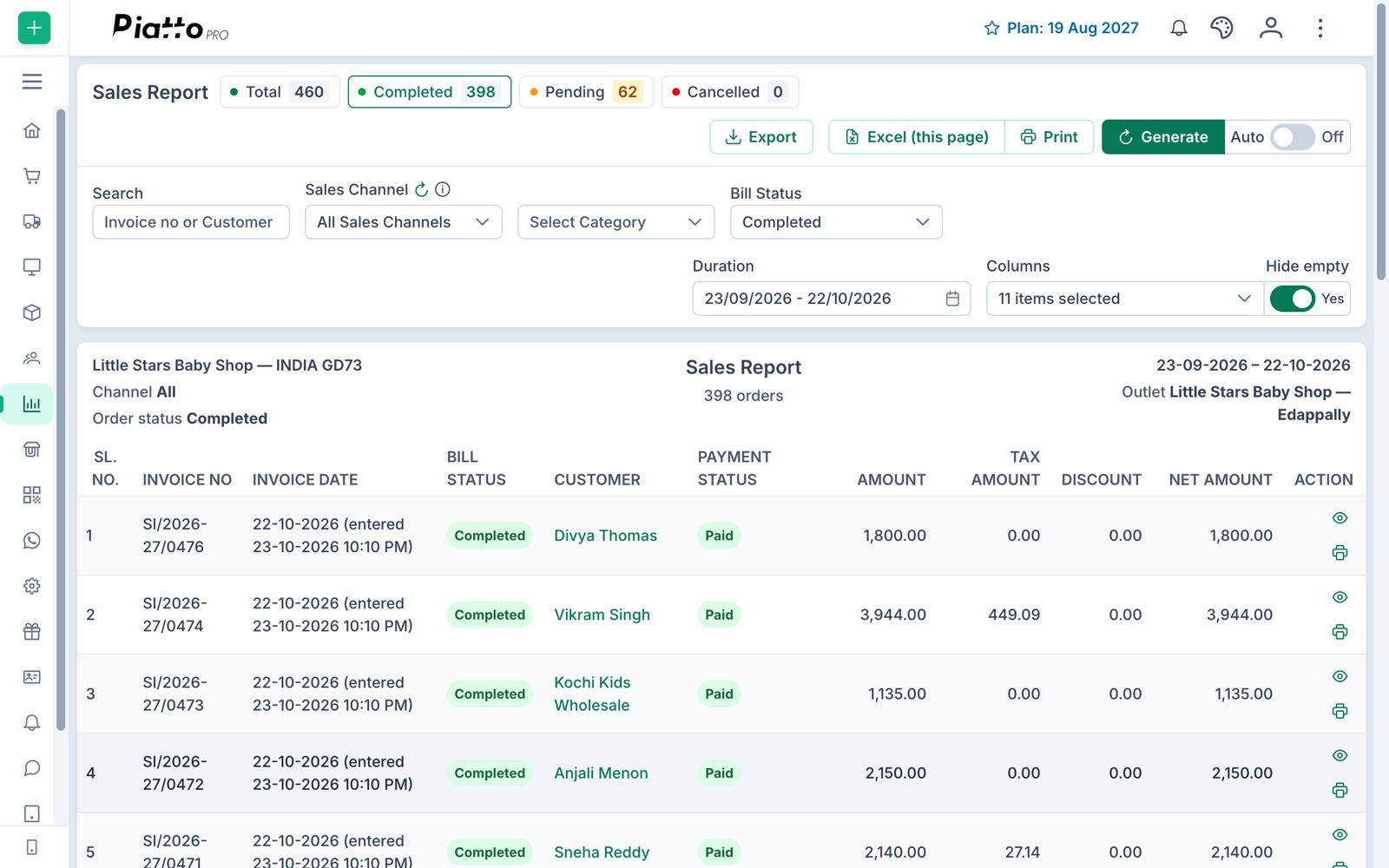
What billing needs: Crowds in spikes, such as the Pitru Paksha fortnight and Makar Sankranti. A daily sales report each night shows what to restock before the next rush.
Festival and fair counters (Chhath markets, Sonepur fair)
Bamboo soops, earthen stoves, brass utensils, fruit, coconuts, sugarcane, garments and household goods.
What billing needs: Short, loud selling windows. The till must not wait for a signal, and the day's sales must be easy to read at closing.
Small-town shops and wholesalers across both banks
Groceries, hardware, agri inputs, cloth, mobile phones and general stores.
What billing needs: Credit is common. A party ledger shows the outstanding amount for each buyer, and low-stock alerts say when to reorder from the district wholesaler.