A city of 115 sectors, 26 malls and one very busy expressway
Gurugram is planned by sector number. Wikipedia counts 115 sectors and 36 wards, and about 26 shopping malls, most of them strung along MG Road. Maruti Suzuki opened its first plant here in the 1970s, General Electric followed in 1997, and the city now hosts Indian offices of about half the Fortune 500. Around that sit older trading streets: Sadar Bazaar in the older part of the city, the Sector 14 and Sector 31 markets, and the Sohna Road stretch with the ILD Trade Centre. Manesar, about 30 km to the south, is the industrial town.
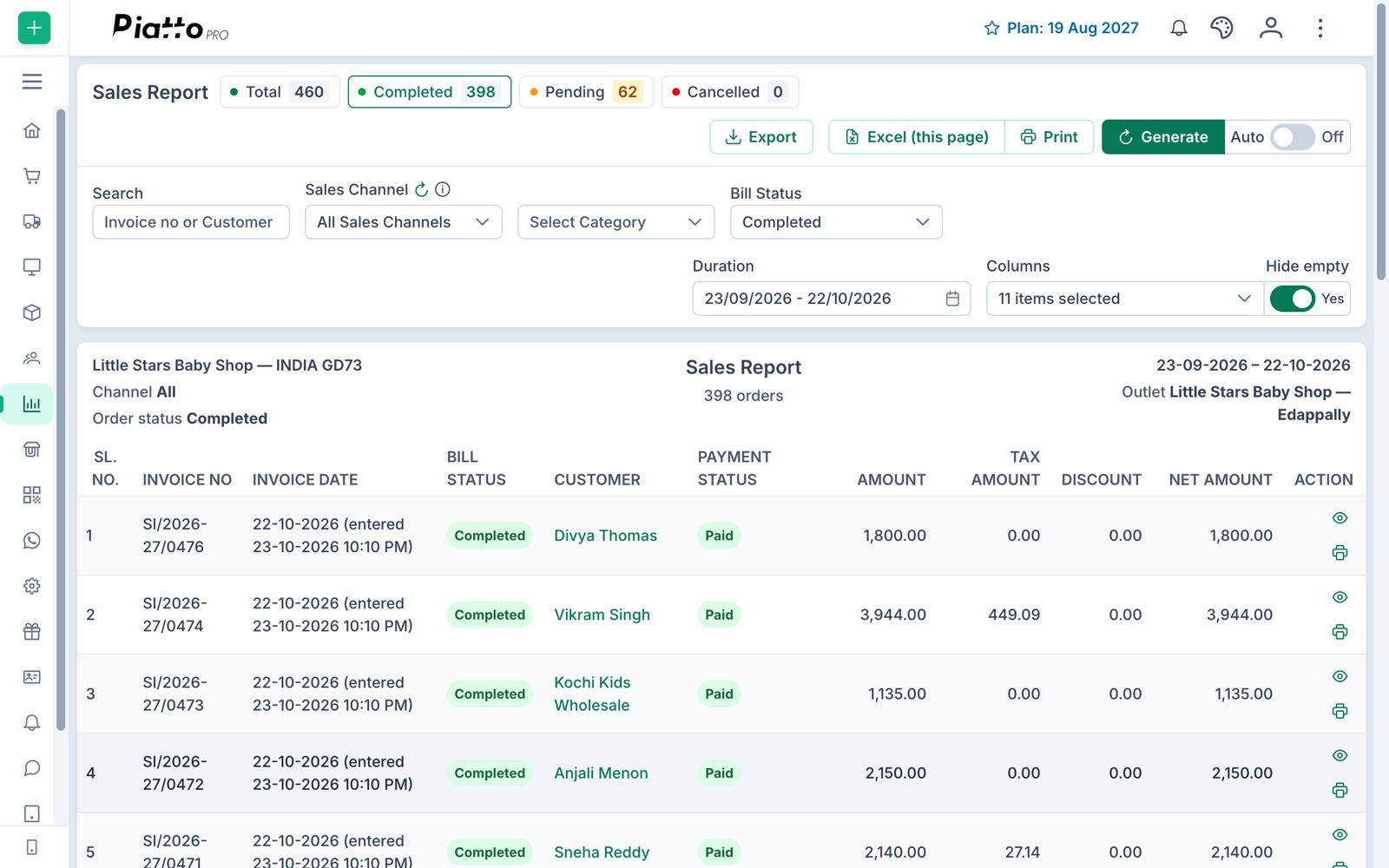
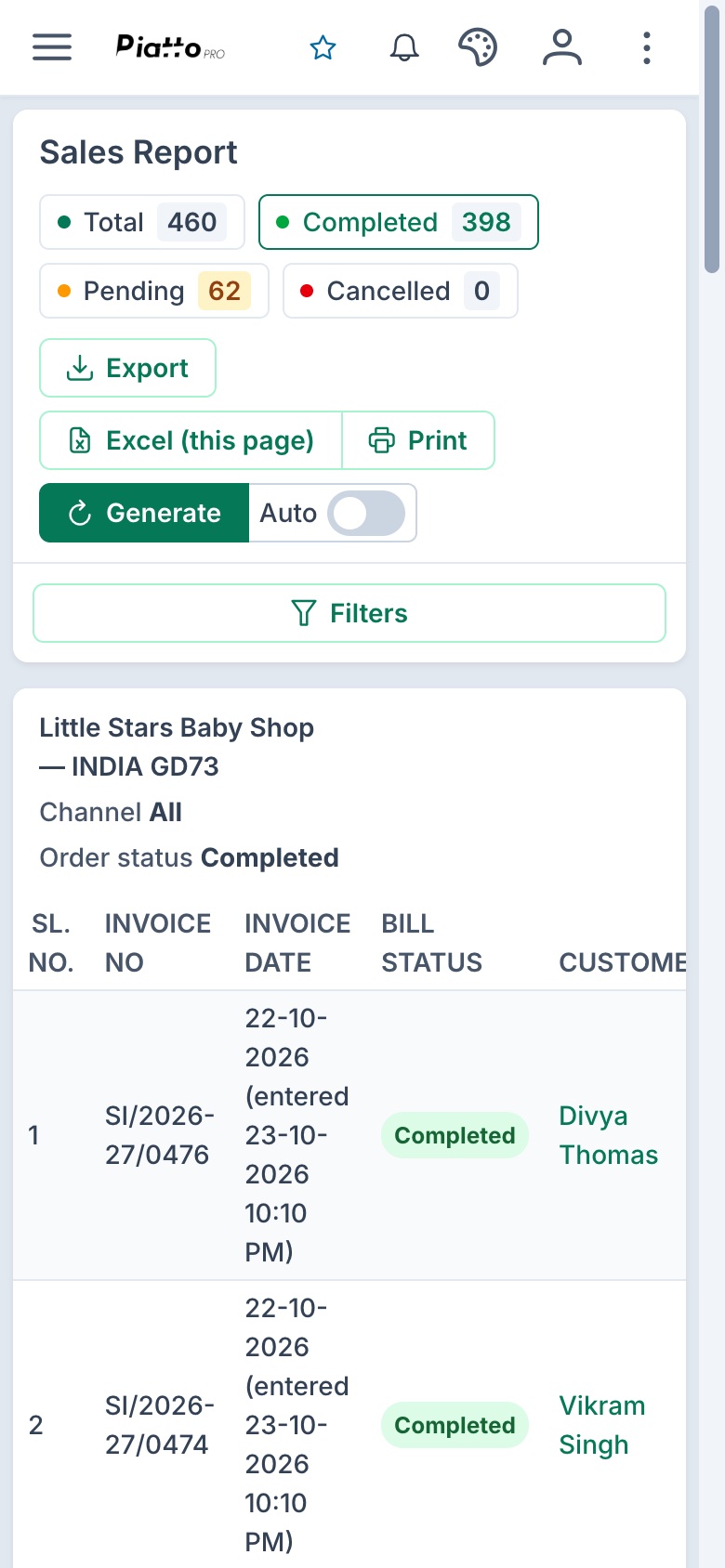
So a billing tool here has to cover a Cyber City kitchen with a delivery-app queue and a supplier on Udyog Vihar who sends invoices to factories. Gurugram is in Haryana, GST state code 06. A buyer in the state gets CGST and SGST on the invoice. A buyer in Delhi, a few kilometres away, is another state, so the invoice carries IGST. Piatto Pro chooses from the place of supply and prints HSN on each line.
Rain jams on NH 48 and smog weeks: billing that survives both
On the night of 9 July 2025, Gurugram got 133 mm of rain in 12 hours, 103 mm of it in 90 minutes. Water stood at the Narsinghpur stretch of the Delhi-Gurugram Expressway, near Basai, at the Rajiv Chowk parking lot, on Sheetla Mata road, in Sadar Bazaar and at Bus Adda road. A queue 7 to 8 km long formed on NH 48, and about 2.5 feet of water collected at Subhash Chowk. The disaster authority told offices to work from home the next day. Another work-from-home advisory followed on 25 August 2026 after a downpour.
The other disruption is air. In November 2024, Gurugram and Faridabad asked private offices to keep at least half their staff at home under GRAP stage 4, and readings in parts of the city went past 700 in the early hours. A counter that depends on the network for every sale stops in the middle of a lunch rush. Piatto Pro bills without the internet and syncs when the signal returns. The device still needs power, and reports and accounts need a connection.