A city that makes the cricket bat, the football and the leather bag
Jalandhar's trade story starts with Partition. Craftsmen from Sialkot settled here and built the sports-goods industry the district site now calls a hub; Wikipedia puts it at 60,000 to 70,000 workers and about Rs 1,700 crore a year, with Rs 400 crore of that in exports. Leather is the second pillar, with a turnover of Rs 1,200 to 1,500 crore on the same page. Both industries ship to dealers in other states, and both have had a hard decade: a Tribune report on the sports hub said many manufacturers had moved their units to Meerut or turned traders.
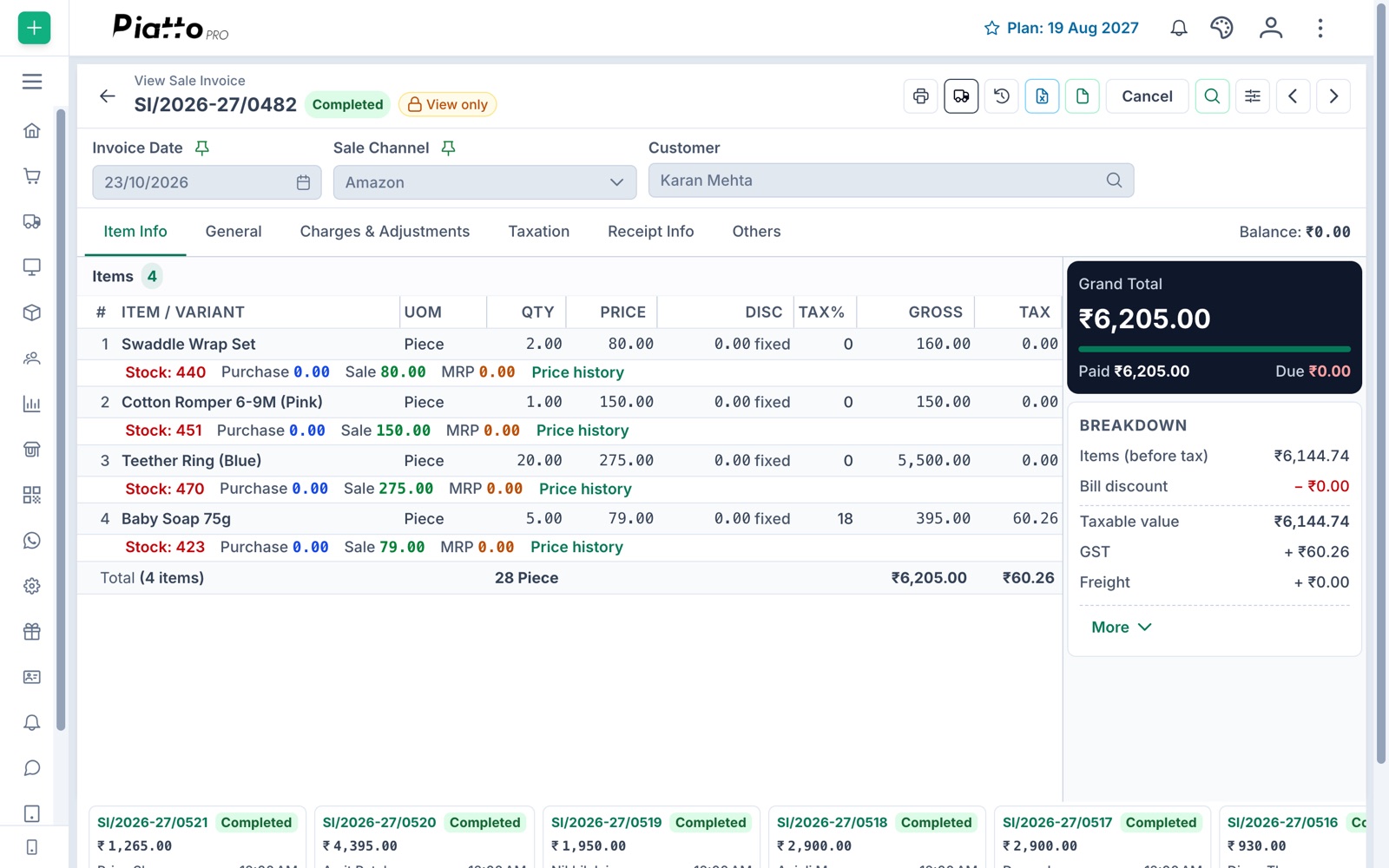
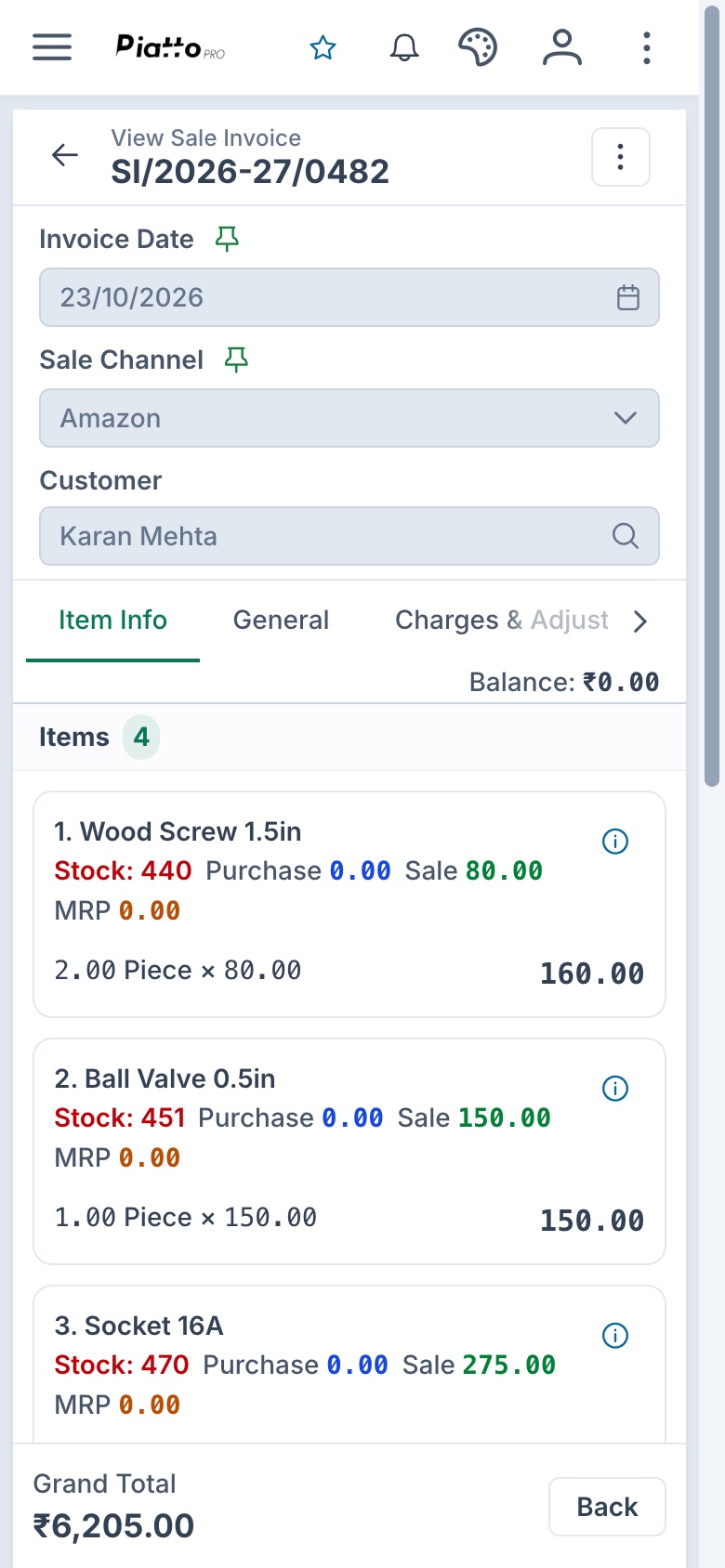
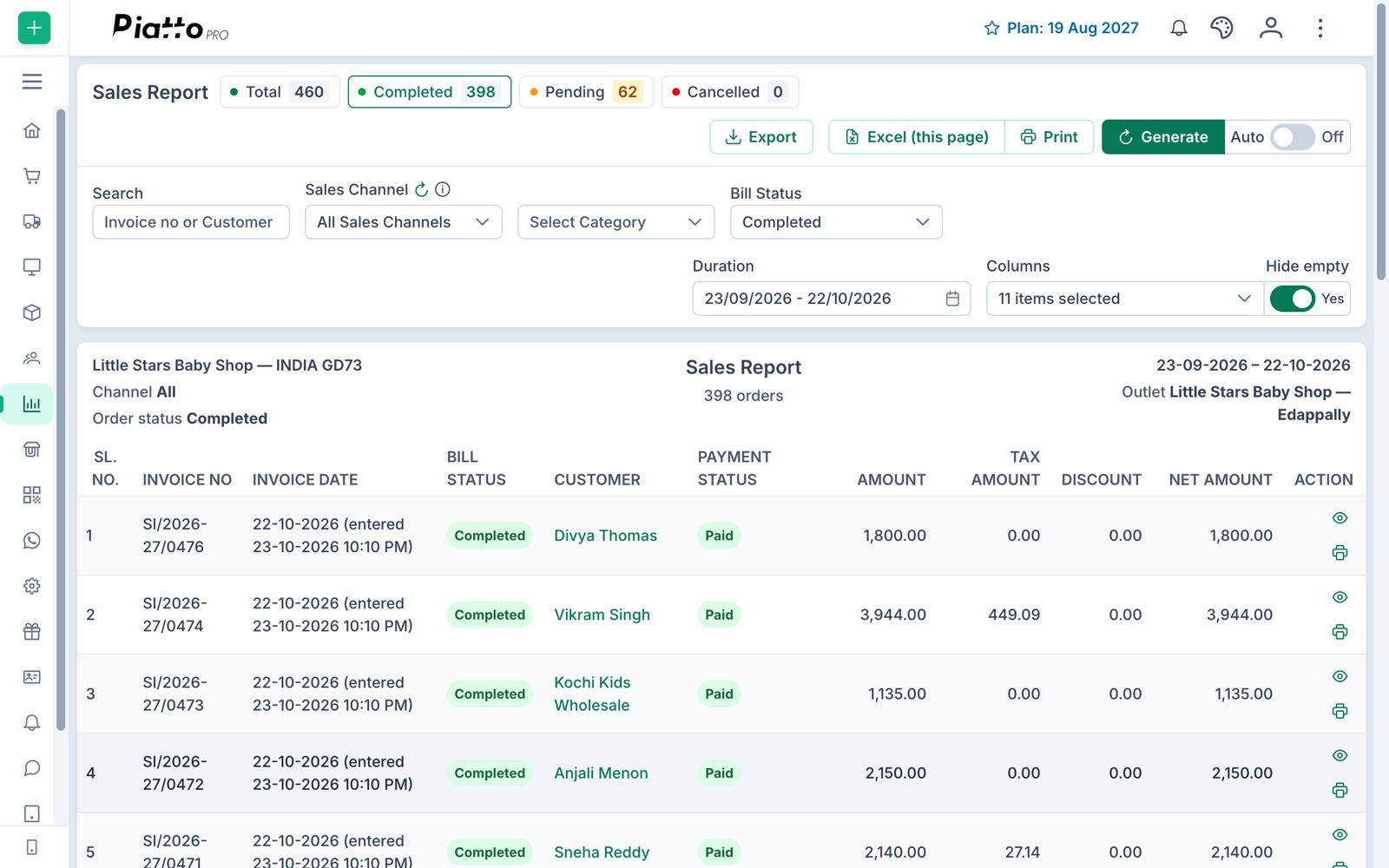
Jalandhar is in Punjab, GST state code 03. A sale to a buyer in Punjab carries CGST and SGST, and one to a dealer in another state carries IGST, picked by Piatto Pro from the place of supply. It prints the HSN code on each line, keeps a ledger of what each dealer owes, and lets one item be sold by the piece, the pair or the carton at its own price. Item names and customer names can print in Punjabi in Gurmukhi script.
Heavy rain years and winter lows
Jalandhar's monsoon arrives in July and August, and in 2018 the city had unusually heavy rainfall, more than 20 per cent above its average according to Wikipedia. Summers average highs near 41 degrees, and winter lows fall to about 6. A Tribune live report once described the city as hit by a torrential downpour.
On days when roads flood or the network drops, a shop that needs a live connection to bill stops selling. Piatto Pro's POS keeps billing offline and syncs when the connection returns. The device needs power, so a charged tablet or small UPS at the counter helps. Reports and accounts need a connection.