A city that sells cloth to the rest of India
Surat's textile trade is counted in markets, not shops: more than 200 of them, clustered around Ring Road and Saroli, with Surat Textile Market, Radha Krishna and Millennium Market among the names buyers know. A 1.5-kilometre stretch of Ring Road alone has 185 multi-storey buildings on its two sides, according to a report on the 2017 GST strike. The city makes polyester and other man-made fabric, and buyers from Uttar Pradesh, Bihar, West Bengal and the southern states are among the biggest. Varachha, a few kilometres away, is where most diamond polishing workshops sit.
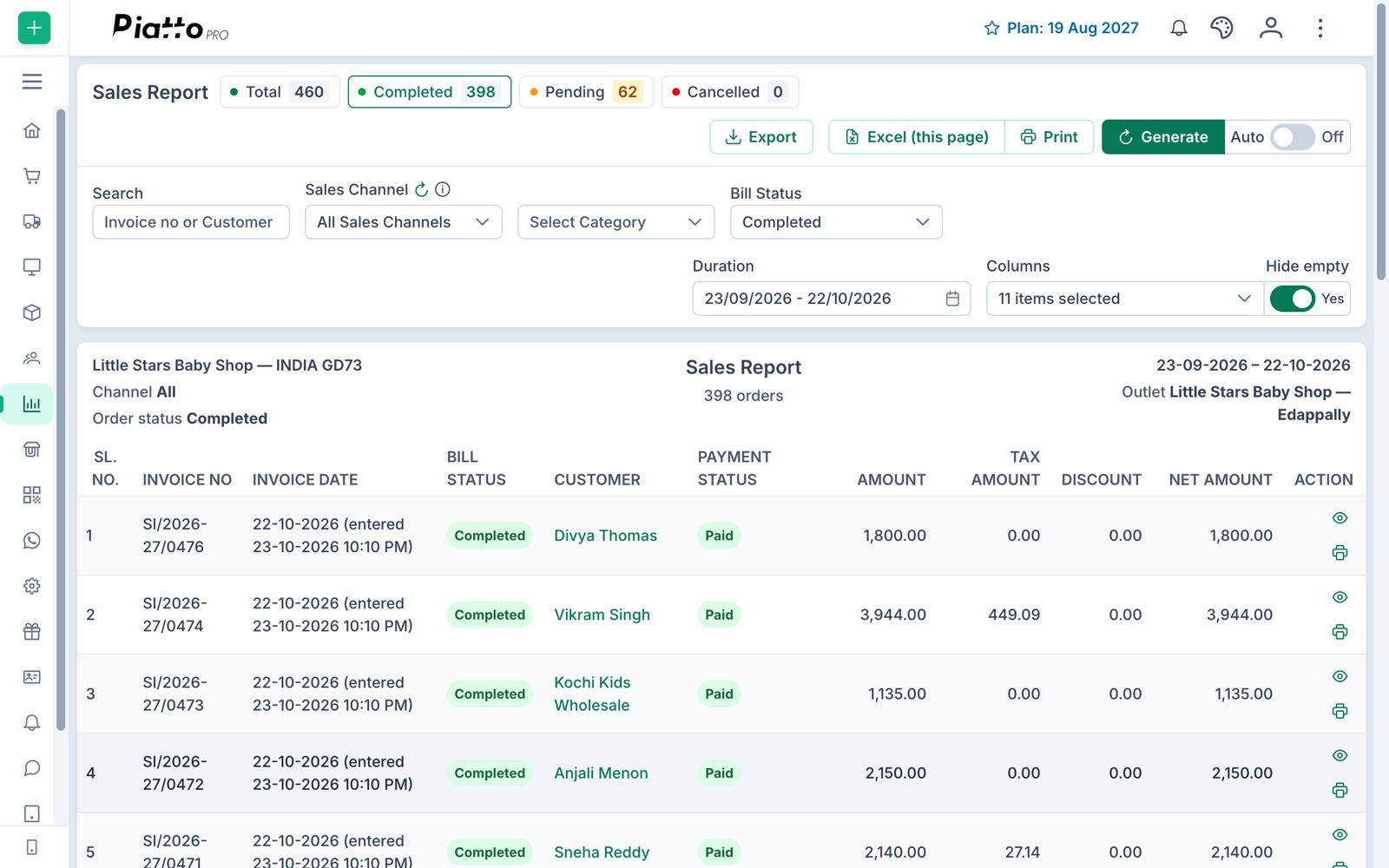
For a trader here, almost every big bill goes out of state. That means IGST rather than CGST and SGST, an HSN code on each line, and a ledger that shows which dealer has paid. Surat is in Gujarat, GST state code 24. Piatto Pro picks CGST and SGST or IGST from the place of supply on the bill and prepares GSTR-1, GSTR-3B and input tax reports for the accountant. It does not file for you.
The Tapi, the creeks and the rain that shuts markets
Surat has flooded about twenty times since the 20th century. The worst recent one came on 7 to 10 August 2006, when a large release of water from the Ukai dam, about 90 kilometres upstream, put most of the city under water and closed businesses for weeks.
Rain alone is enough now. In June 2025 the city got 346 mm in 24 hours. On 6 July 2026 Limbayat, Katargam, Varachha and Dabholi were flooded from knee to waist level in an hour, and at the end of that month, under a red alert, the district ordered factories closed for two days and reports said textile markets were shut.
A till that waits for the internet is useless on those days. Piatto Pro bills offline and syncs after. Reports and accounts need a connection, and the device needs power.