These are the main trade belts of the state, with the counter jobs that matter most in each.
Lucknow: Aminabad, Chowk and Hazratganj
Chikankari kurtas and sarees, zardozi work, ittar, spices, dry snacks, bridal wear and hosiery.
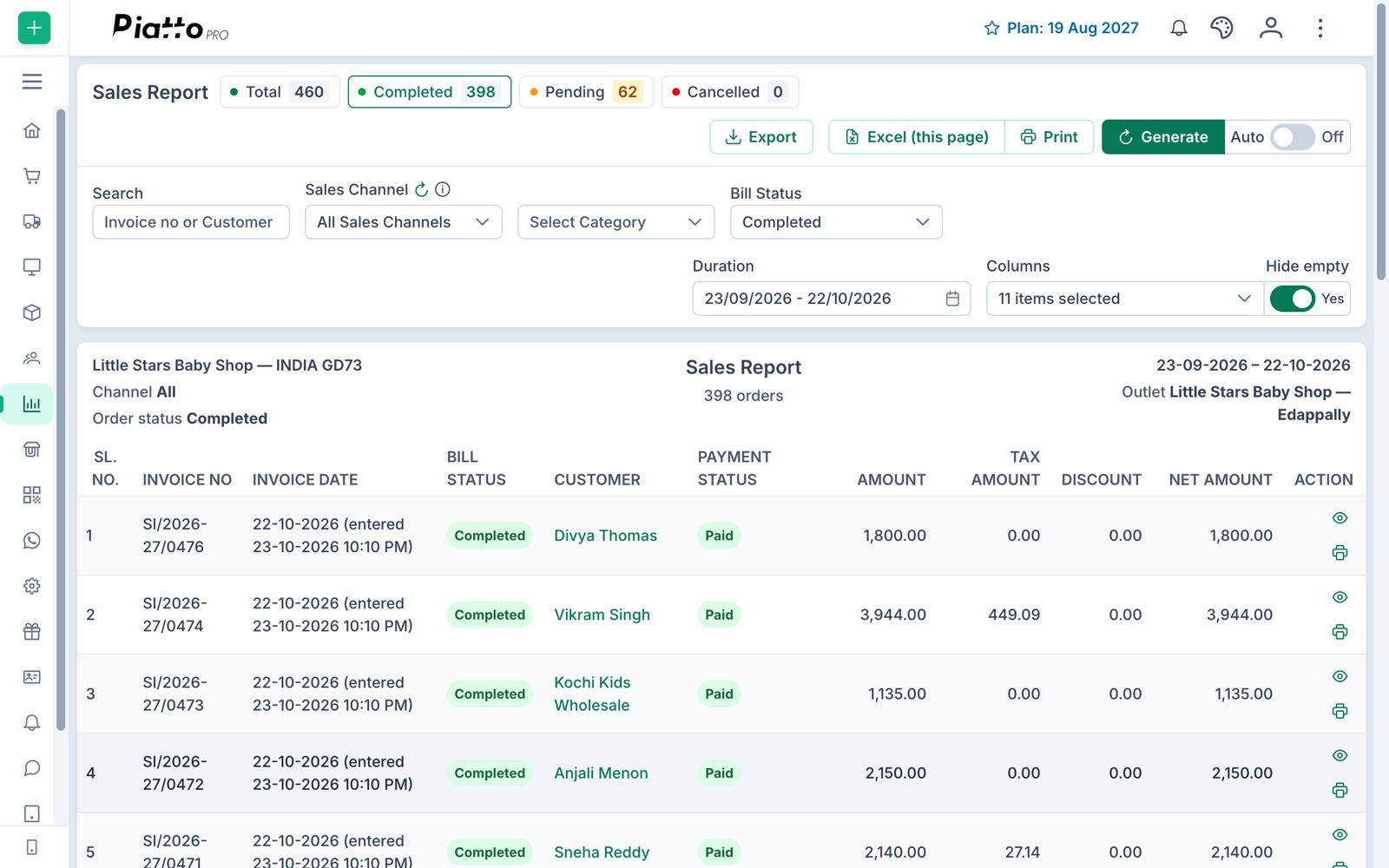
What billing needs: Wholesale and retail from the same shelf. One item can be sold in more than one unit, such as a piece and a set, each with its own price, and a separate price list can be kept for wholesale buyers.
Kanpur: Jajmau, Naya Ganj and Birhana Road
Leather goods from the Jajmau tanneries, wholesale cloth, readymade garments and showroom sales.
What billing needs: Big invoices to repeat parties. A party ledger shows what each buyer still owes, and GSTR-1, GSTR-3B and input tax reports are ready for the accountant.
Noida and Gautam Buddh Nagar: Sector 18 and the industrial sectors
Street fashion, footwear and electronics in Sector 18, with electronics assembly and garment export behind them.
What billing needs: Several counters open at once. Each counter gets its own login, barcode billing keeps the queue short, and several outlets can sit in one account.
Craft towns: Mirzapur, Varanasi and Saharanpur
Carpets and brass from Mirzapur, Banarasi silk sarees from Varanasi, wood craft and hosiery from Saharanpur.
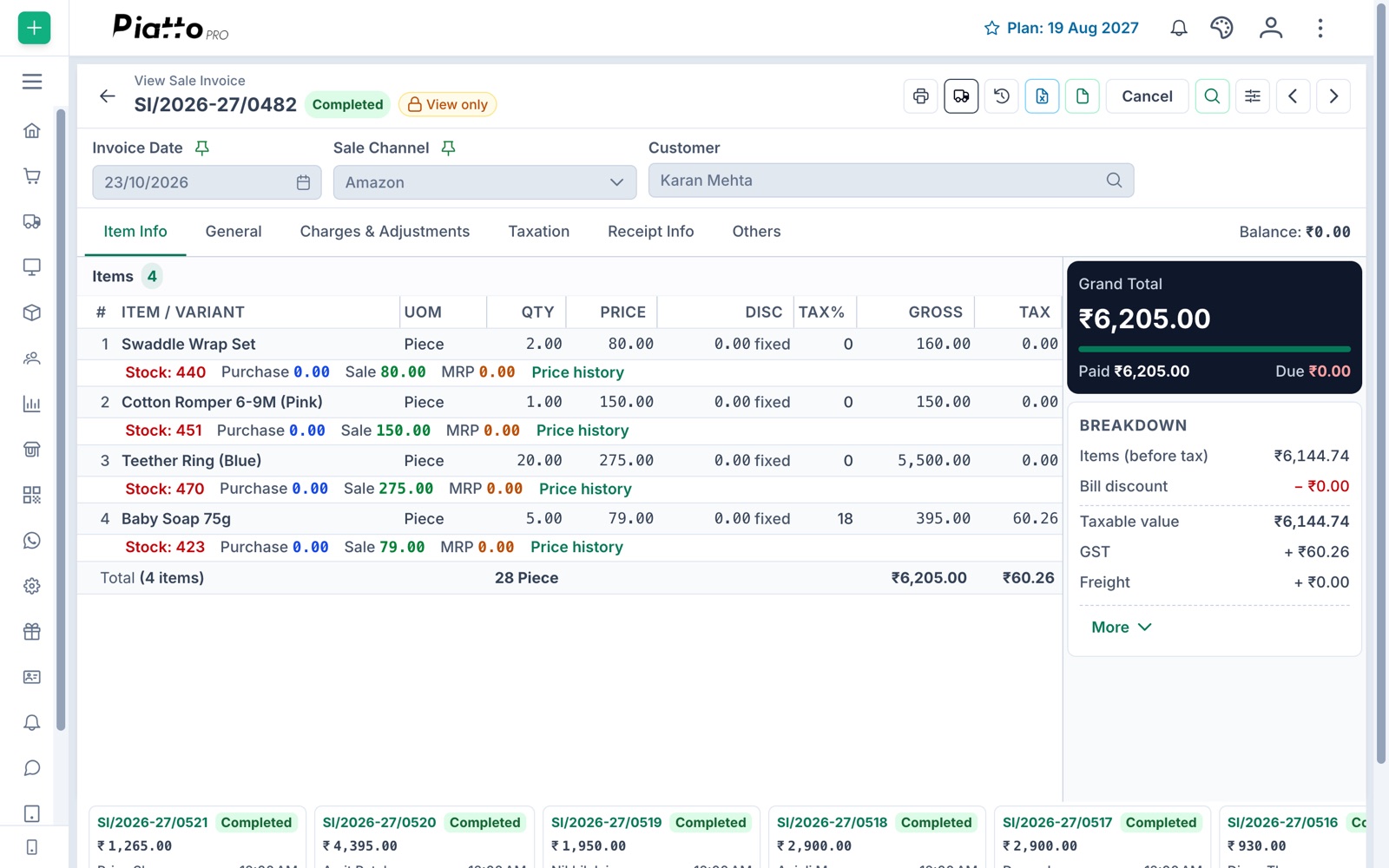
What billing needs: Many small items with different tax rates. The rate set on each item is applied on every line, and free Excel import brings an existing item list across.
Restaurants and sweet shops in the big cities
Dine-in, takeaway and delivery orders in Lucknow, Kanpur and Noida.
What billing needs: Kitchen tickets, and Swiggy sales that land in the same daily report as the counter. Swiggy has operated in Lucknow, Kanpur and Noida.