Karnataka is three trading countries in one state
Karnataka splits into the coastal strip of Karavali and Tulu Nadu, the hills of Malenadu along the Western Ghats, and the Bayaluseeme plains that cover most of the state. It has 31 districts. Bengaluru is the capital and by far the largest city, followed by Hubballi–Dharwad, Mysuru, Belagavi, Kalaburagi and Mangaluru. The state economy was about ₹25 trillion in 2023–24, and the districts of Bengaluru Urban, Dakshina Kannada, Hubballi–Dharwad and Belagavi bring in the most revenue.
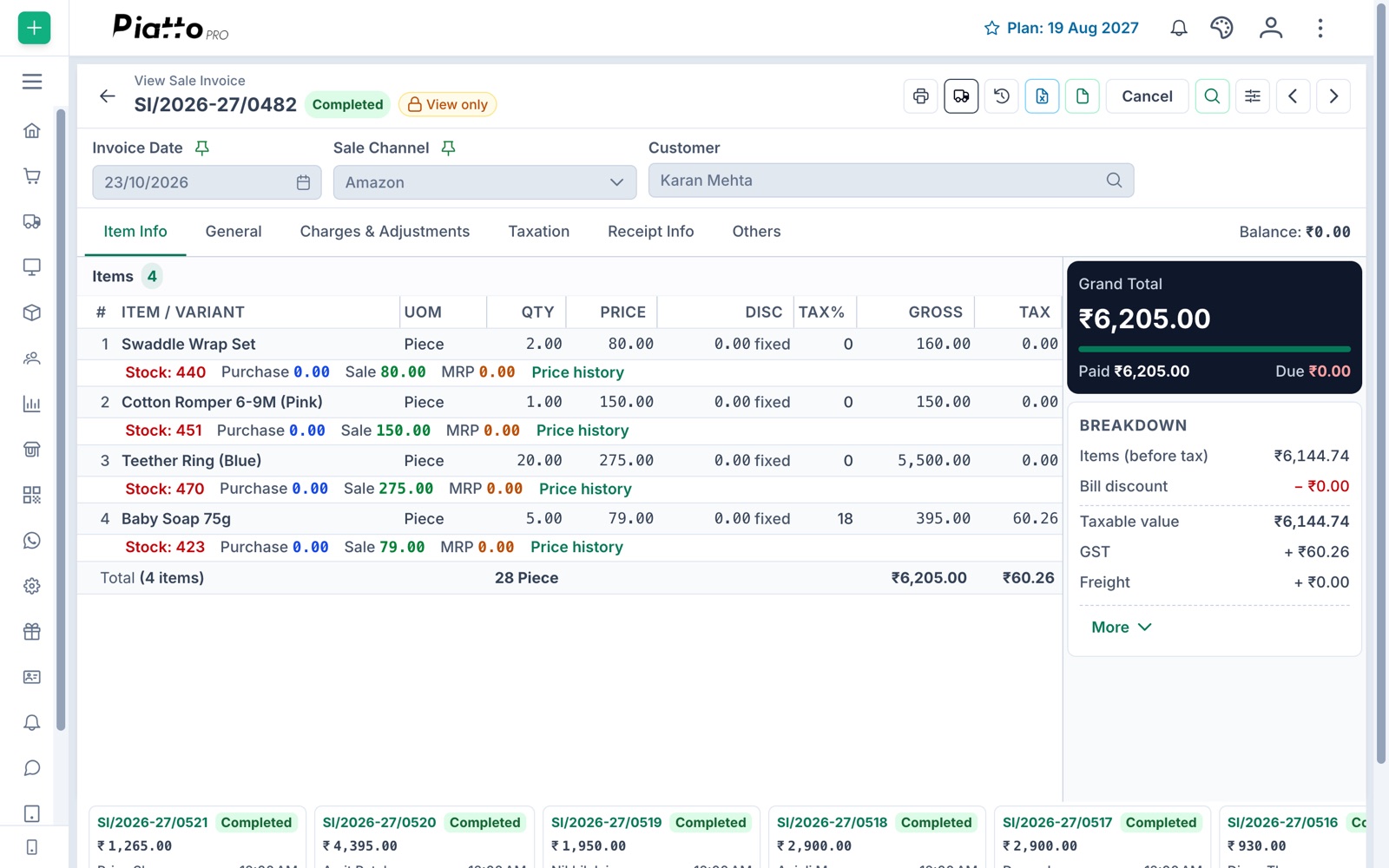
A shop in Madikeri, a wholesaler in Belagavi and a restaurant in Bengaluru do not trade alike, but they share the same tax position. Karnataka is GST state code 29. A sale to a buyer inside the state is split into CGST and SGST, and a sale to a buyer in another state carries IGST. Piatto Pro chooses between them from the place of supply on the bill, and puts the HSN code on every line. This page covers the state as a whole. The Bengaluru, Mysuru and Mangaluru pages go down to individual markets.
Rain on the coast, floods in the hills: bills must not wait for the network
The southwest monsoon runs from June to September. Coastal Karnataka averages about 3,600 mm of rain a year, against about 1,100 mm for the whole state. In the hills the damage comes as landslides. On 15 to 17 August 2018 parts of Kodagu took more than 200 mm of rain, roads went under water and 55 relief centres opened. The Coffee Board estimated about 48,000 tonnes of coffee lost across Kodagu, Chikkamagaluru and Hassan.
After a night like that, a shop in a hill town may have no signal for days but still has customers who need supplies. The POS bills without the internet and sends the day's sales to the account once the connection is back. The device still needs power, so keep a charged battery nearby. Reports and accounts need a connection, so run them when the line returns.