A palace city where one festival sets the year
Mysuru drew about 3.15 million tourists in 2010, and the city is built around the Mysore Palace, the Chamundi Hills and a trade in silk and sandalwood. The city gave its name to the Mysore silk sari, woven from pure silk and gold zari. The Mysore Sandalwood Oil Factory opened in 1917, and sandalwood carving is an old local craft. Tourism and IT are the two big employers, with Infosys and Wipro both running campuses in the city.
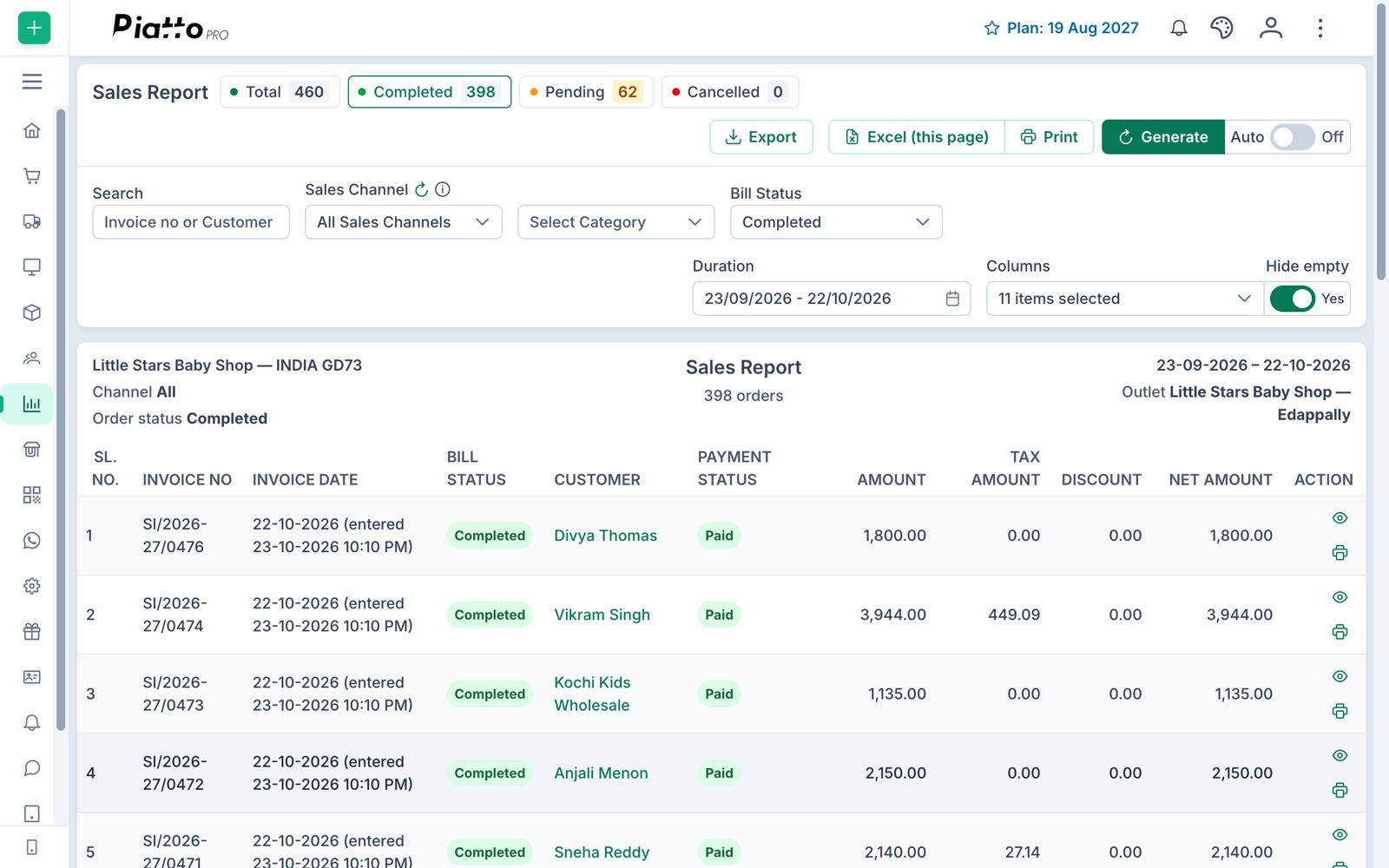
For a shopkeeper, that means a trade that swings with the calendar. Mysuru is in Karnataka, GST state code 29. Sales inside the state split into CGST and SGST, and sales to out-of-state tourists who want goods sent home carry IGST. Piatto Pro chooses from the place of supply on the bill and writes the HSN on each line. Below are the counters we hear about, a Dasara plan, and the rules to confirm with the local offices.
Dasara crowds: the network that nearly fails when you need it
Dasara has run for ten days every year since 1610, and the Jumboo Savari procession on Vijayadashami draws the biggest crowd. In 2024 the festival drew over 16 lakh tourists, and the organisers put business at more than Rs 500 crore, with about Rs 110 crore from hotels. In 2023 hotel occupancy touched 90 percent from 3 to 6 October. A crowd that size is hard on any mobile network around the Palace and the market lanes.
A counter that waits on the network to open a bill loses sales in a queue like that. The POS bills without the internet and syncs when the signal returns. The device needs power, and reports and accounts need a connection, but the till itself keeps running. For a flower stall at Devaraja Market or a restaurant by the Palace, that is the difference between a busy night and a lost one.