Five kinds of counter we expect to meet in the capital, with what billing has to do at each.
Souq Al Zal, ad-Dirah
Rugs, agarwood and oud oil, brass coffee pots, incense burners, antiques, abayas and the formal bisht cloak.
What billing needs: High-value single items and returning buyers. An item can be priced per piece or per set, and the party ledger holds what a regular still owes. Opening hours here are reported inconsistently, so keep your own counter times.
Al Batha'a souq, the "Filipino souq"
Clothes, homewares and groceries, with street food stalls between the shops.
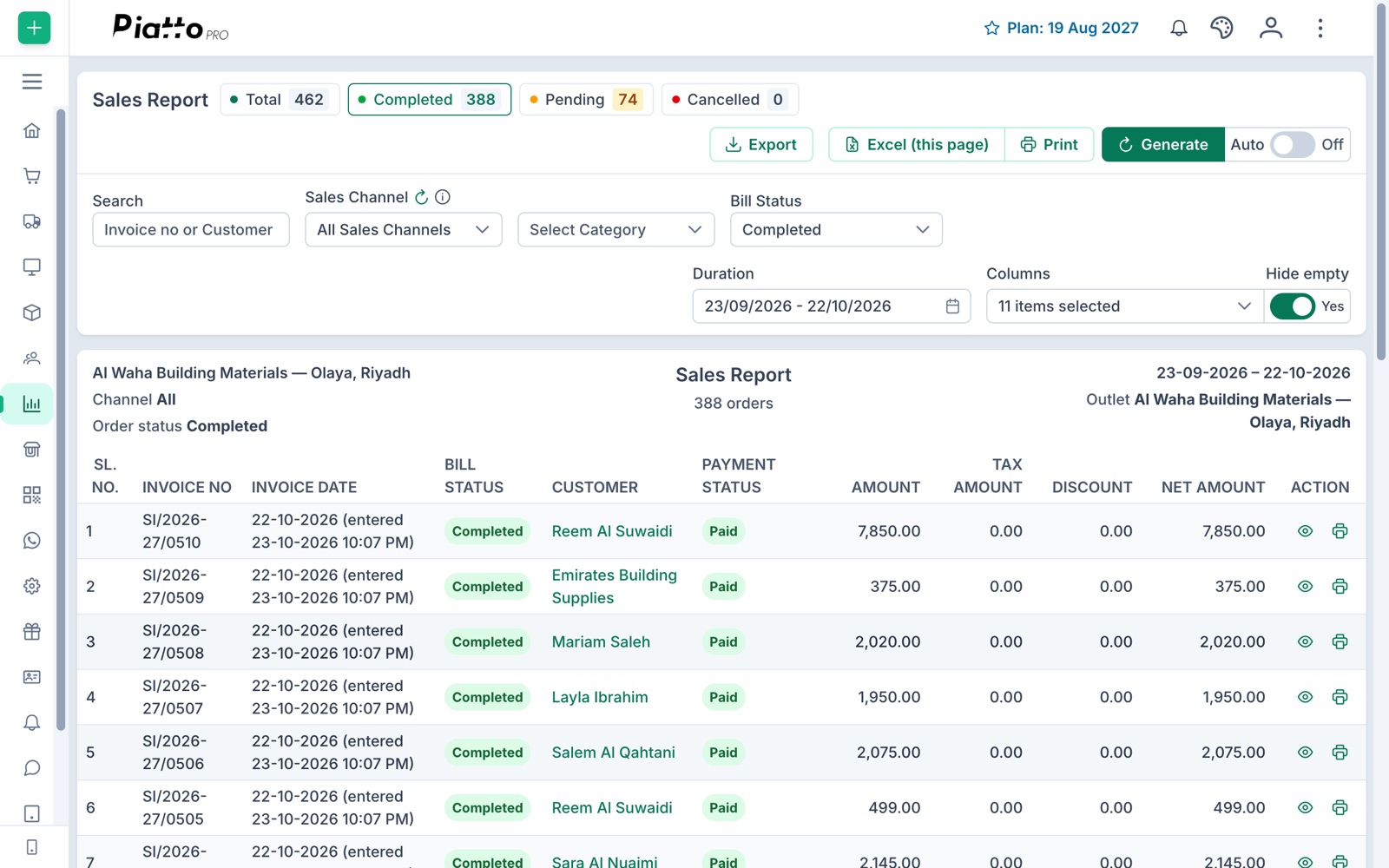
What billing needs: Many small cash bills on busy Friday evenings, with quiet Thursday mornings. Barcode billing for packed goods and a daily sales report separate the two rhythms.
Olaya district and its malls
Fashion, electronics, perfume, cafes and restaurants, with offices upstairs.
What billing needs: Several counters in one unit and often several branches. One login per cashier and several outlets in one account keep the numbers separate.
Malaz, Al Murabba and the residential grocers
Groceries, bakeries and household goods for the neighbourhoods around the Murabba Palace, completed in 1938.
What billing needs: Fast-moving everyday stock. Low-stock alerts, barcode scanning and a free Excel import of items get a new shop going within days.
Restaurants and kitchens (Al Hamra, Nakheel and Granada mall food courts and beyond)
Dine-in, takeaway and orders from Talabat, HungerStation and Jahez.
What billing needs: Kitchen tickets, a till that survives the Ramadan evening peak, and delivery-app sales landing in the same report as the counter.