Howrah makes things, and the bills show it
Howrah has long been called the Sheffield of the East. Small engineering firms cluster around Belilios Road near Howrah station, though Wikipedia says the trade has thinned this century. Liluah is full of foundries, and the state government says about 95 per cent of West Bengal's roughly 500 foundry units sit in Howrah district. Burn Standard, Ramkrishna Forgings, Shalimar Paints (a plant dating to 1902) and Tarsons all have plants here. For the shops, Kali Babu Bazar is the largest grocery market, with Balitikuri, Salap, Bakultala, Makardaha and Kona Bazar among the others.
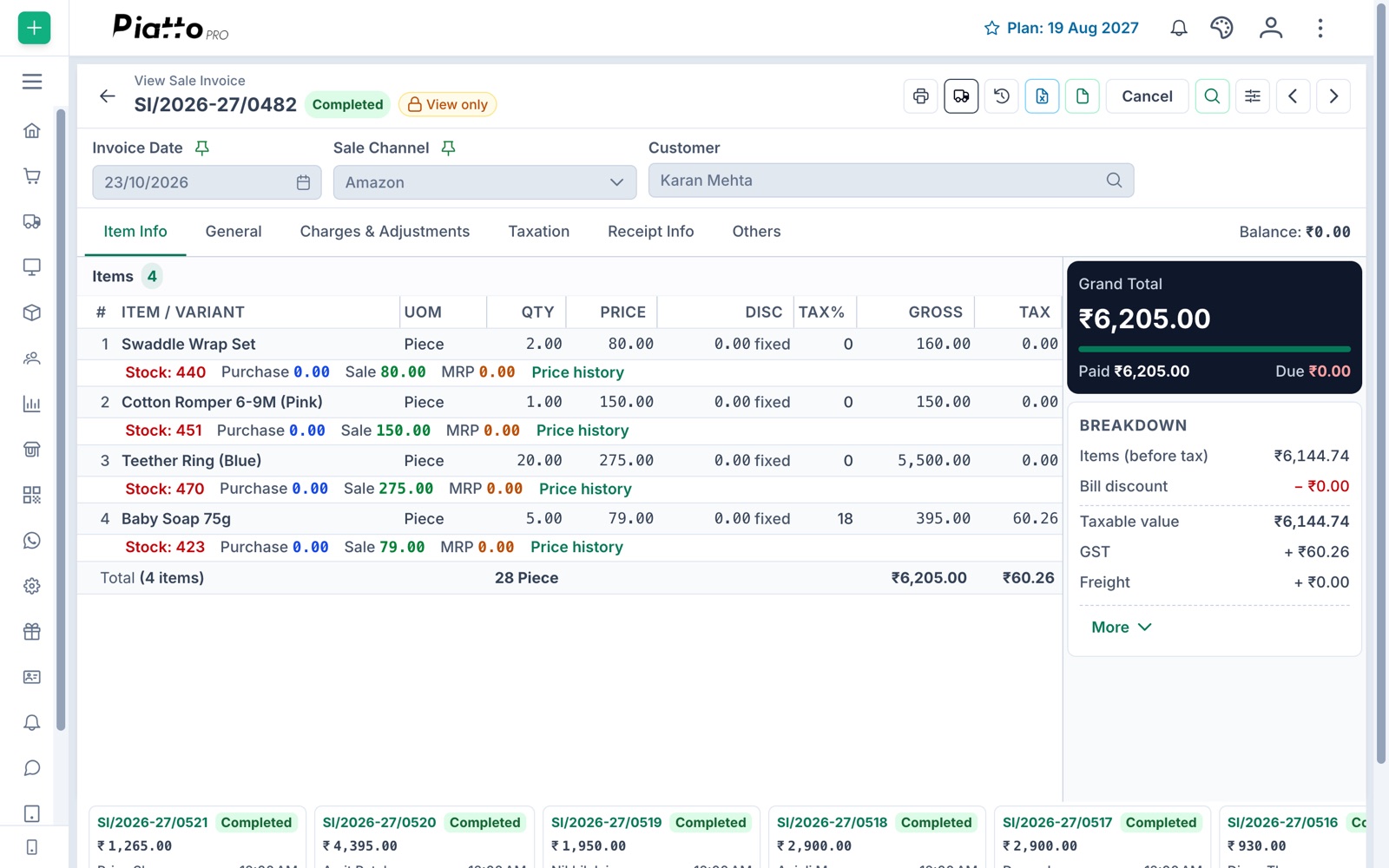
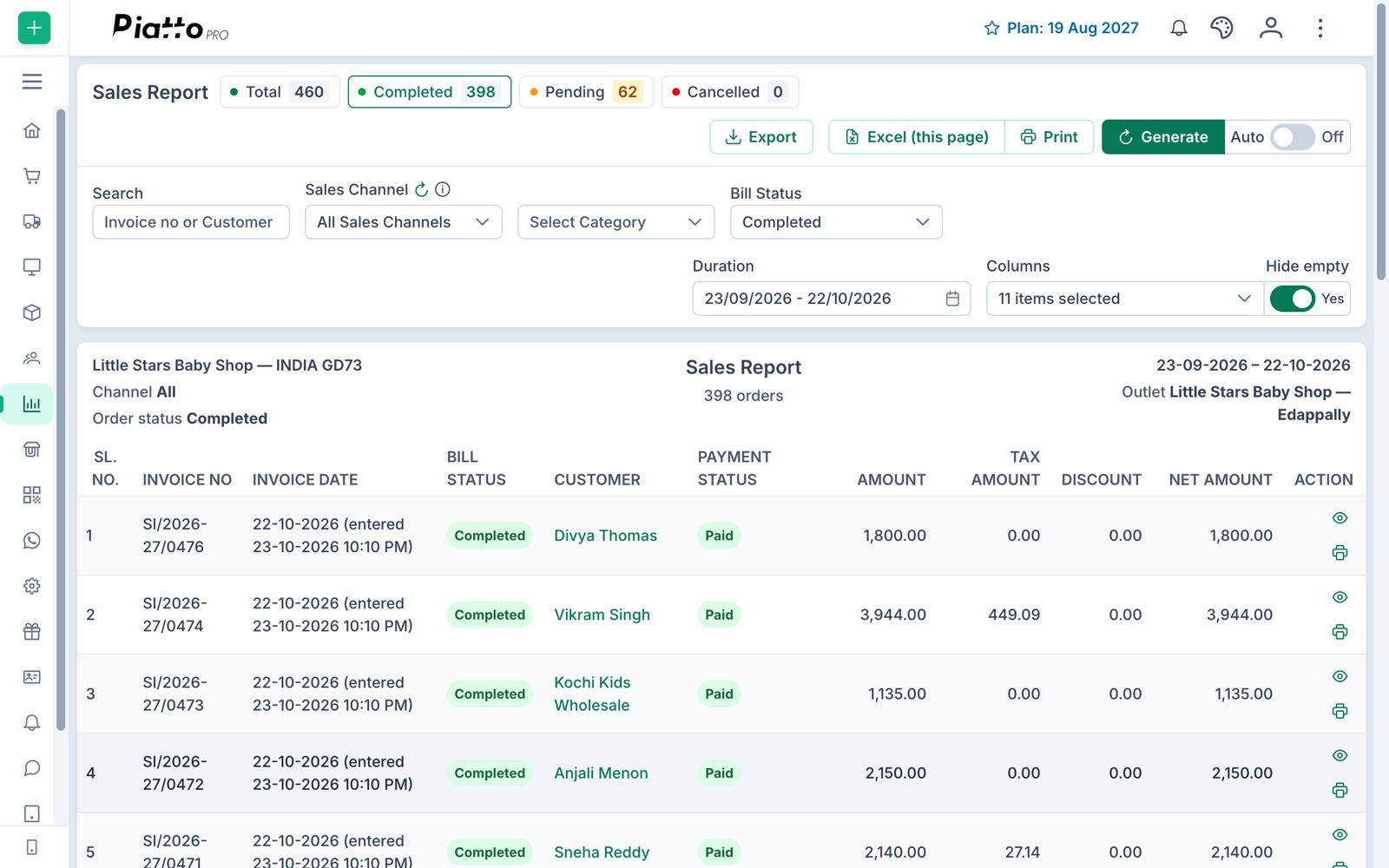
A workshop sells parts to a buyer in another state, and a grocer sells one packet at a time. Piatto Pro has to do both. Howrah is in West Bengal, GST state code 19, so a sale inside the state carries CGST and SGST and a sale to another state carries IGST, picked from the place of supply on the bill. Each line carries its HSN code. Items can be sold in more than one unit, such as a piece, a kilo or a carton, each with a price.
Storms and downpours: why the counter needs to run offline
Cyclone Amphan in May 2020 knocked out power and mobile service across Kolkata and the neighbouring districts. Industry figures put about 7,000 of the state's 14,167 cell sites out of use, and networks were still at 65 to 70 per cent of capacity on the third day. Howrah's monsoon is heavy, with about 1,744 mm of rain in a year, and the overnight downpour of 22 and 23 September 2025 brought Kolkata and its suburbs to a standstill.
A workshop that cannot bill cannot dispatch, and a grocer without a till loses the morning rush. The Piatto Pro POS bills offline and syncs the sales when the network returns. The device needs power, and reports and accounts need a connection, so a charged spare tablet is worth having.