Kolkata trades by the lane, and every lane has its own habit
In Burrabazar, a trader may name a street and a building, not a shop: Kalakar Street for the old Dhakapattys cloth merchants, Hari Ram Goenka Street for saris, Mahatma Gandhi Road (the old Harrison Road) as the spine. Wikipedia counts more than 50,000 merchants there. New Market on Lindsay Street has over 2,000 stalls under one Victorian roof. College Street is the Boi Para, the colony of books. South of the city, Gariahat spreads along Rashbehari Avenue and Gariahat Road, with sarees, jewellery, crockery and a fish market.
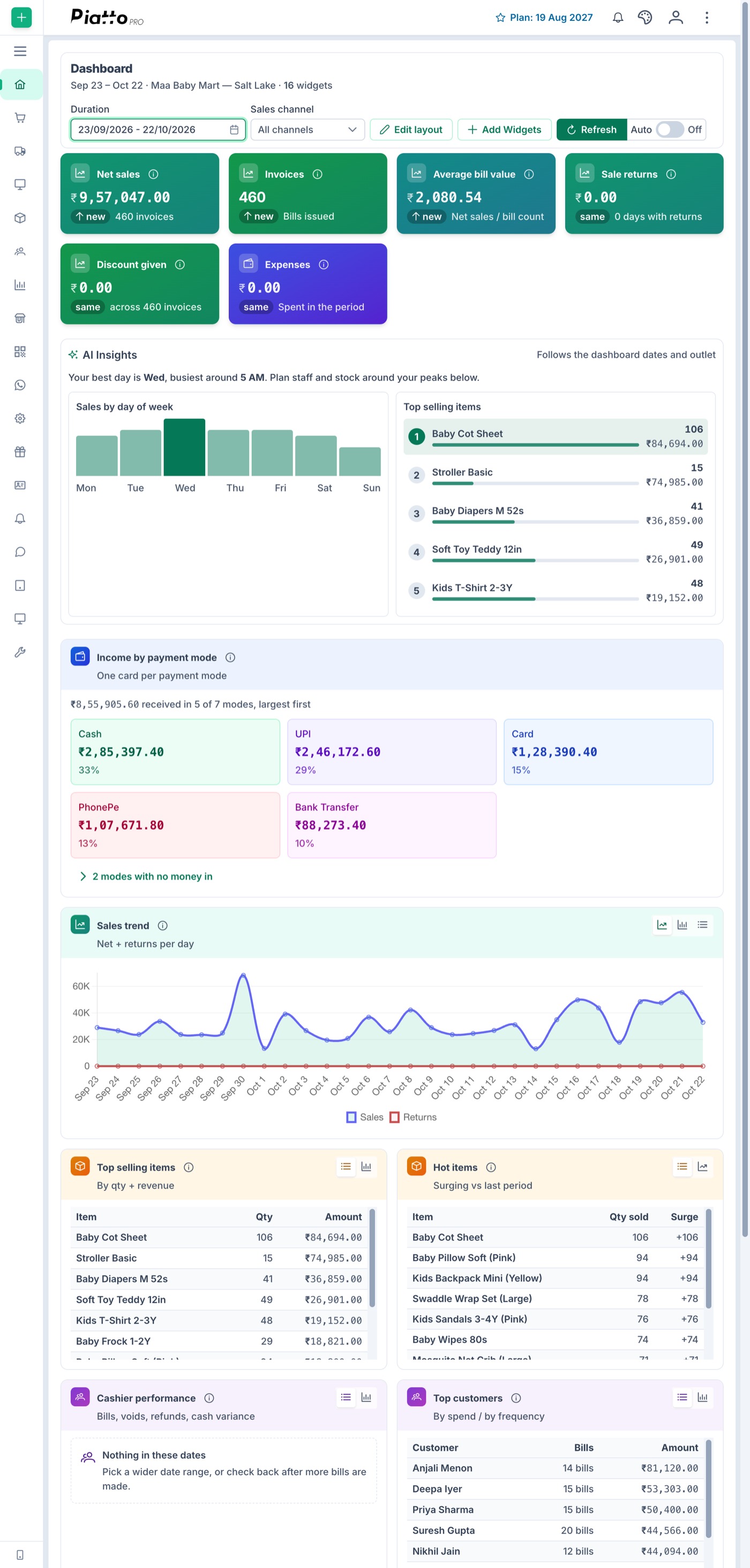
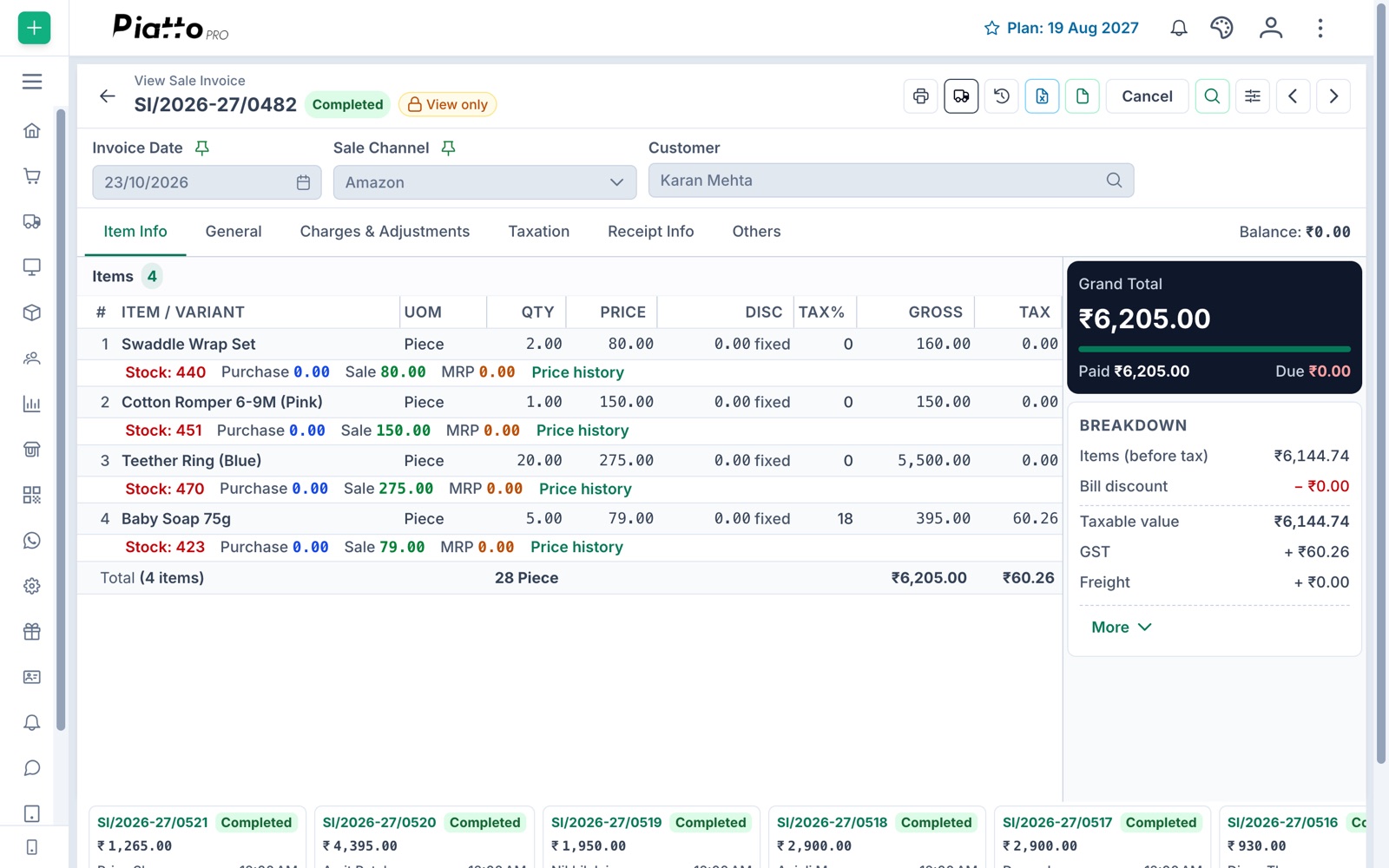
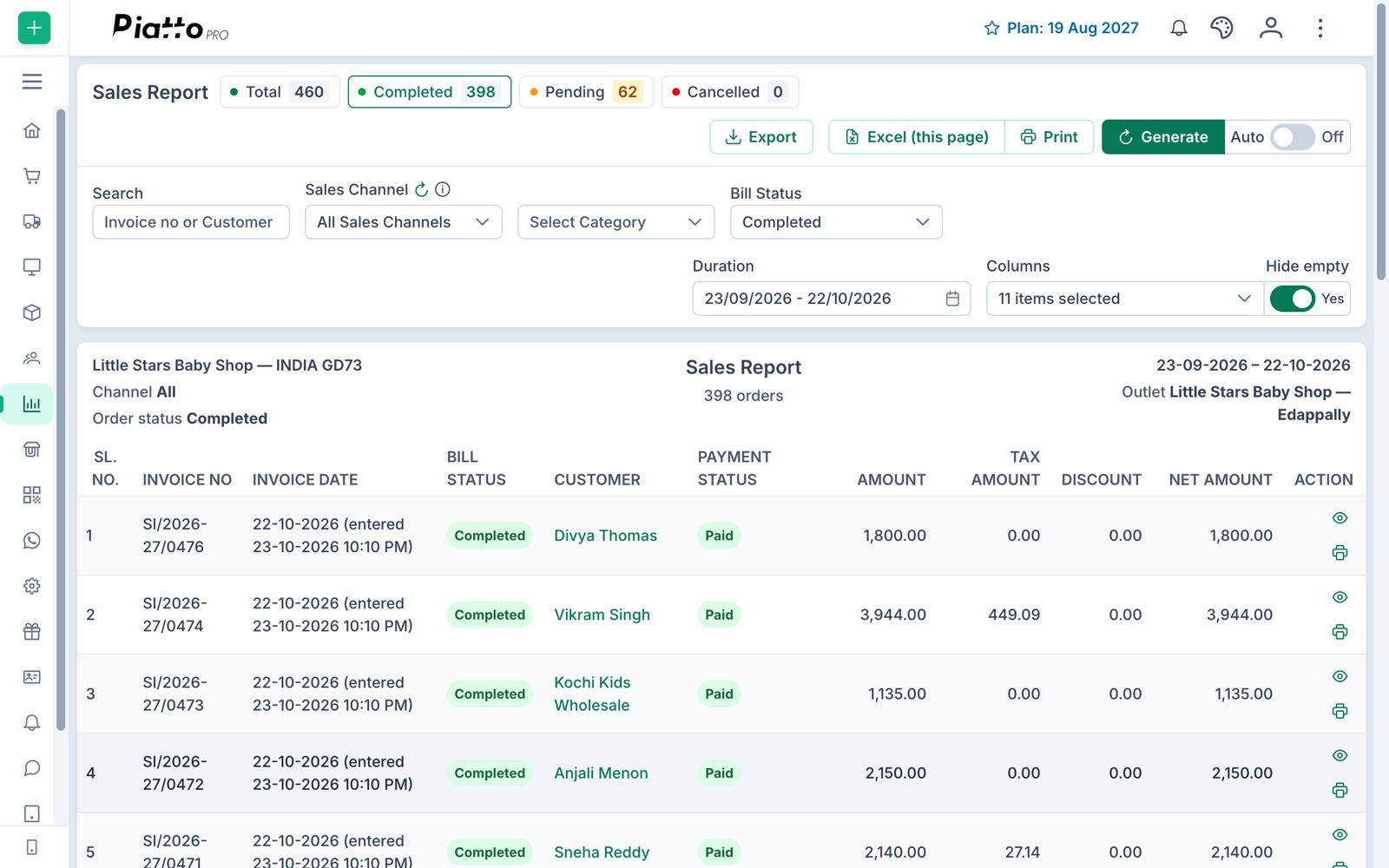
Piatto Pro fits these counters with the jobs they share: a tax invoice on each sale, stock that matches what is on the shelf, a ledger for buyers who settle later, and a till that carries on when the lights go. Kolkata is in West Bengal, GST state code 19. A sale to a buyer in the state carries CGST and SGST, and a sale to another state carries IGST. Piatto Pro chooses from the place of supply on the bill.
Rain, cyclone and fire: why the till must outlast the grid
On 22 and 23 September 2025, days before Durga Puja, an overnight downpour dropped 332 mm at Garia Kamdahari in a few hours. College Street, Gariahat, Central Avenue and EM Bypass went under water, the Metro ran cut-down services, and the chief minister advised office-goers to stay home. Cyclone Amphan in May 2020 had already taken out power and mobile service across the city for days.
Fire is the other worry in the old wholesale lanes. Wikipedia records big blazes in Burrabazar, among them Nandram Market in 2008 and Bagree Market in 2018, and says most of the roughly 50 fires of 2005 were put down to short circuits. A shop that bills on a device with offline sync keeps its sales on the device and syncs when it can. Reports and accounts need a connection and the device needs power.