One state, three very different trade belts
West Bengal does not trade in one way. Kolkata's Burrabazar is described as the wholesale capital of eastern India, with cloth, spices, electricals and household goods sold in bulk. Across the river, Howrah holds about 95 per cent of the state's roughly 500 foundry units, according to the state government. In the north, Siliguri sits in the narrow Siliguri Corridor and links the plains with the Dooars, Darjeeling, Sikkim and the borders with Nepal, Bhutan and Bangladesh.
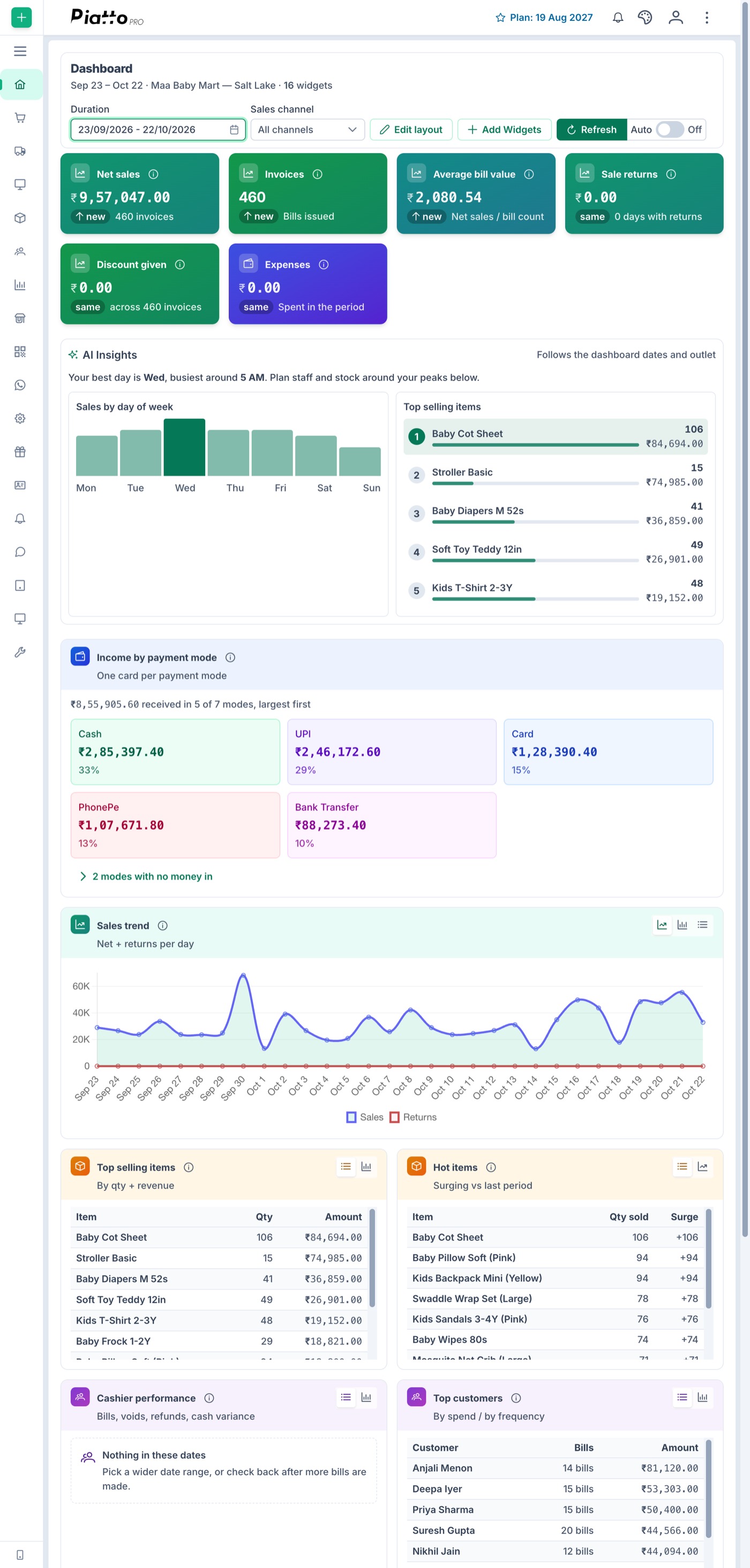
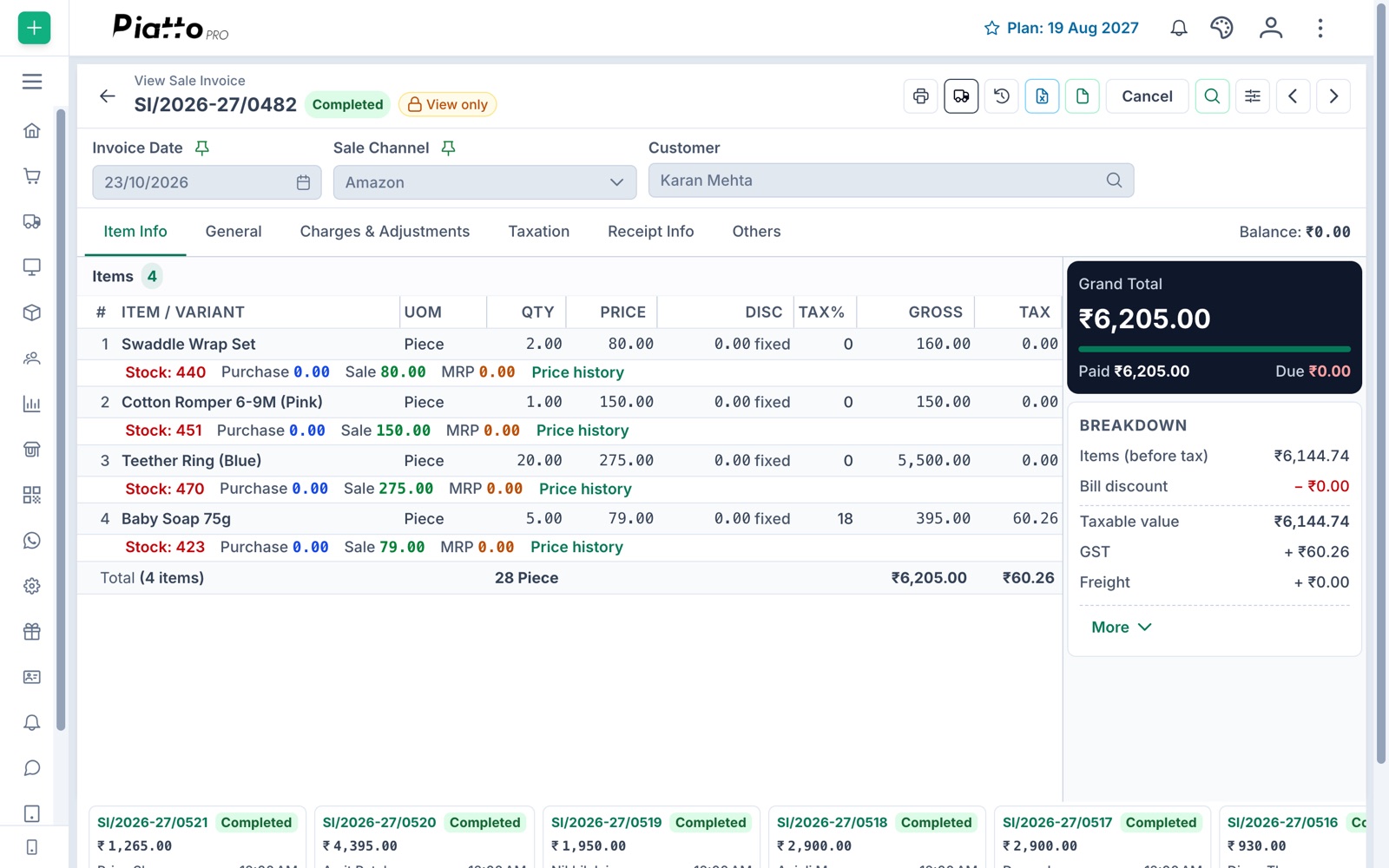
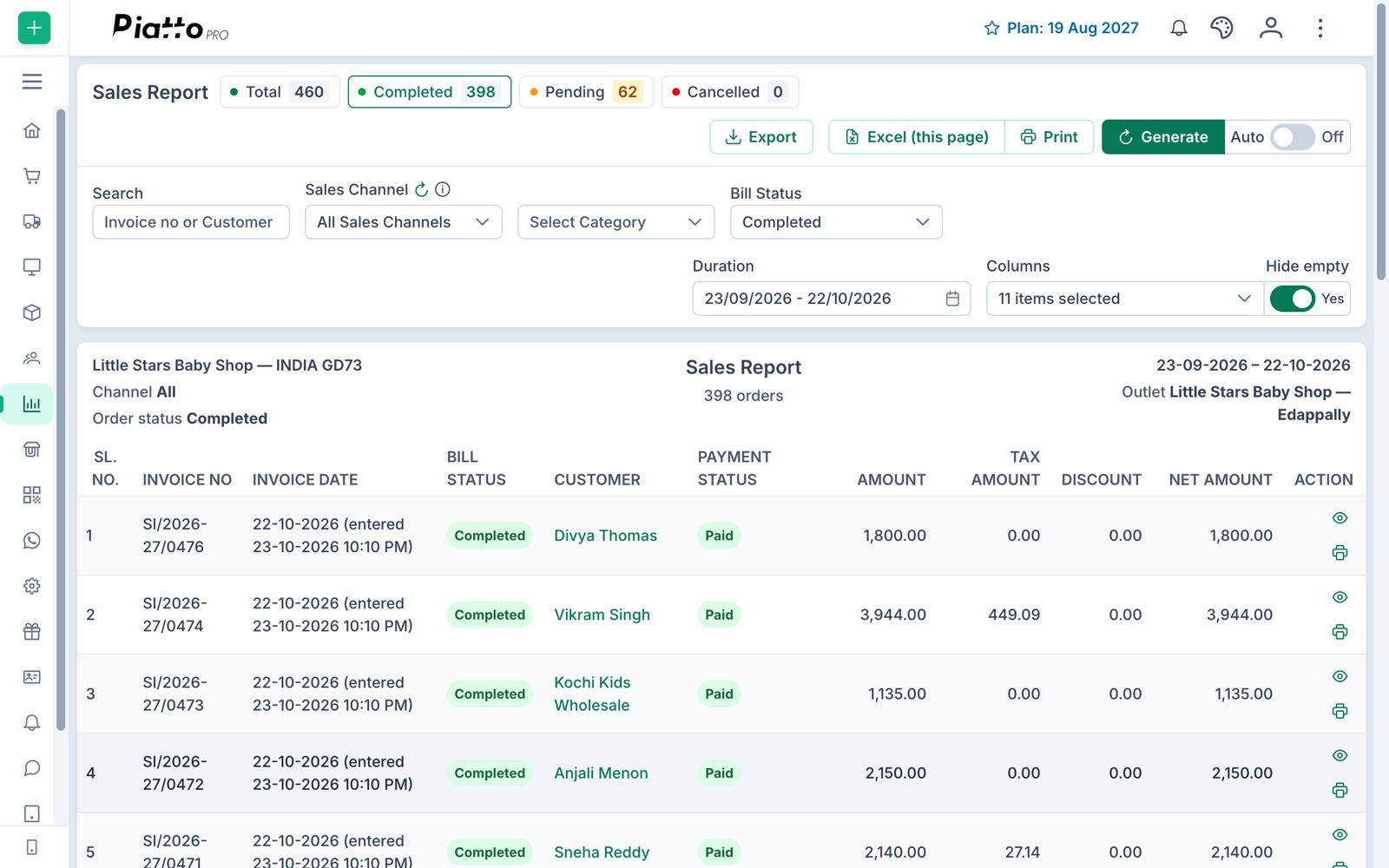
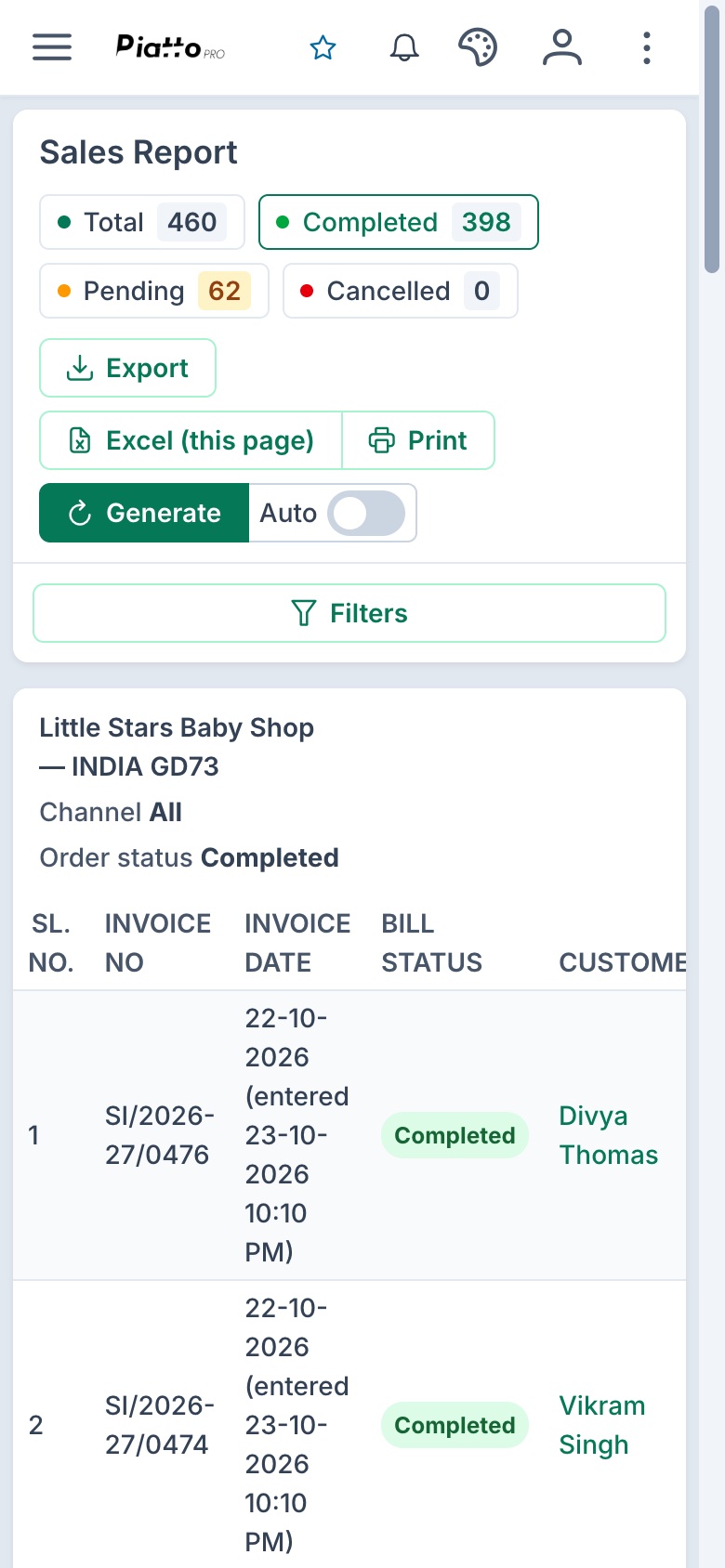
A shop in any of these belts needs the same basics: a tax invoice on every sale, a stock count that matches the shelf, a ledger for buyers who pay later, and a till that survives a bad day. West Bengal has GST state code 19. A sale inside the state carries CGST and SGST, a sale to another state carries IGST, and Piatto Pro picks the right one from the place of supply on the bill. For city detail, see our Kolkata, Howrah and Siliguri pages.
Cyclones, floods and landslides: keep the till alive
When Cyclone Amphan hit in May 2020, power and mobile networks failed across Kolkata and nearby districts. Industry figures put about 7,000 of 14,167 cell sites in the state out of service, and on the third day networks still ran at 65 to 70 per cent of capacity. In October 2023 a glacial lake burst in Sikkim and the Teesta flood washed out stretches of NH10 between Siliguri and Gangtok. In early October 2025 landslides in Darjeeling district took down a bridge over the Balason on the Siliguri to Mirik road.
A till that needs the internet stops in weeks like these. The Piatto Pro POS bills without a connection and syncs the sales later. Reports and accounts need internet, and the device still needs power, so keep a charged tablet or a small UPS at the counter.